Den Bosch at a Glance
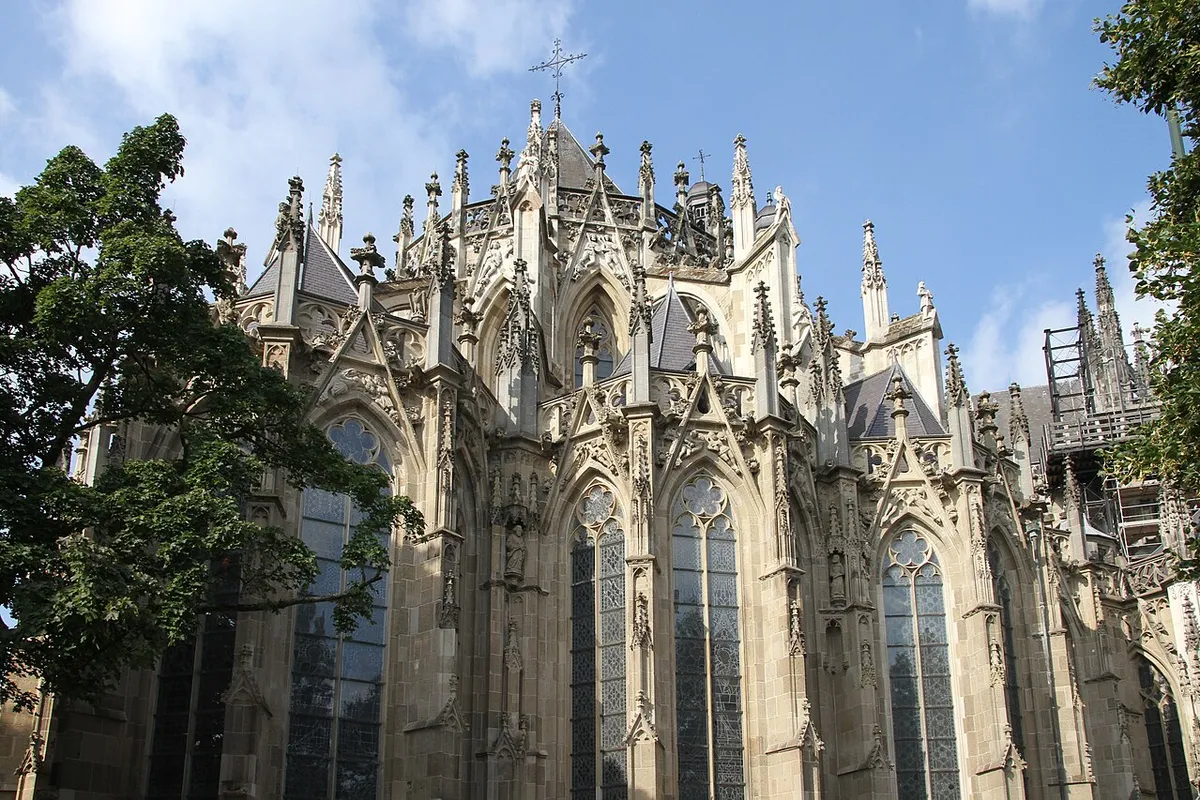 Photo: Den Bosch, the Netherlands. Source: Wikimedia Commons.
- Population: 160,000 (city proper)
- Expat population: growing — driven largely by the Brabant tech and logistics corridor and proximity to Eindhoven
- Main languages spoken: Dutch, English (widely spoken, particularly in the business and service sectors; the ASML ecosystem in nearby Eindhoven has raised English proficiency across the region)
- Key industries: logistics, healthcare and pharma, public sector, tech (with strong links to Eindhoven)
- Average commute: 15–20 minutes by bike within the city; train to Eindhoven 20–25 minutes, Utrecht 35 minutes, Amsterdam under 1 hour
Den Bosch — officially ’s-Hertogenbosch, though nobody outside of official paperwork calls it that — is the capital of North Brabant province, sitting at the junction of the A2 and A59 motorways roughly in the middle of the country’s southern half. It is not a city that dominates expat conversations the way Amsterdam or even Eindhoven does, but it probably should.
The city has around 160,000 residents, a medieval centre that genuinely merits the word historic rather than merely using it as a marketing term, and a cultural identity that is distinct from the more businesslike atmosphere of the Randstad. The Brabanders have a reputation across the Netherlands for being warmer, more relaxed, and more sociable — what locals call the Burgundian lifestyle. In my experience advising expats across the country, this is not just a regional cliché. It shows in daily life in ways that are harder to quantify but very real once you are here.
For expats, Den Bosch hits a sweet spot that is increasingly hard to find in the Netherlands: a proper city with full urban infrastructure, strong transport links to the rest of the country, a functioning housing market where you can actually find something, and costs that do not require a second income just to cover the rent. It is worth taking seriously.
Cost of Living
Den Bosch is meaningfully more affordable than Amsterdam, Utrecht, or The Hague, and broadly comparable to Breda. The difference in rent versus the Randstad is real — not marginal.
| Item | Estimated monthly cost |
|---|---|
| 1-bedroom apartment (private rental) | €950–€1,250 |
| 2-bedroom apartment | €1,300–€1,800 |
| Monthly OV public transport pass | €60–€100 |
| Groceries (single person) | €270–€350 |
| Dinner out (mid-range, two people) | €60–€110 |
| Gym membership | €25–€45 |
For context: a comparable two-bedroom in Amsterdam runs €2,200–€2,800 per month; in Utrecht, €1,800–€2,300. Den Bosch is a significant step down. Suburban areas like Rosmalen are typically €200–€350 cheaper than equivalent city-centre properties.
Use the Housing Budget Checker to see what your budget realistically covers in Den Bosch before you start viewing. The Cost of Living Calculator can also help you model the full monthly picture.
Best Neighbourhoods for Expats
Centrum — The historic centre: tall narrow houses, canal-side streets, the Markt square, and the Sint-Janskathedraal within walking distance of most things. Rents are higher here than anywhere else in the city, and parking is difficult, but if you can afford it and want to live in the middle of things, it is a strong choice. Good for single professionals and couples without cars. 1-bedroom rents in the Centrum average €1,100–€1,250.
Vughterweg and surroundings — Just south of the centre, this area has become popular with young professionals and expats. More residential than the Centrum but still within easy cycling distance of the main squares and the station. A mix of apartment blocks and older townhouses. Often slightly more affordable than equivalent Centrum properties. 1-bedroom average €1,000–€1,200.
De Pettelaar — A newer, quieter residential area east of the centre. Popular with families, with good schools nearby and more green space. Still a short cycle to the city. Rents are lower than the Centrum while the area is well-kept. 1-bedroom average €950–€1,100.
Rosmalen — Technically a separate municipality, though now fully absorbed into the Den Bosch urban area. Suburban in feel: larger homes, more parking, quieter streets. Very popular with families with children. Rents are noticeably more affordable — typically €200–€350 less than comparable central properties. The trade-off is that you will rely more on the train or a car than if you live centrally.
Working in Den Bosch
Den Bosch has a diverse economy anchored around several sectors. Logistics is one of the strongest: the city’s position at the junction of major road and rail routes has made it a distribution hub, with several large logistics companies and supply chain operations based in the area. If you work in operations, procurement, or supply chain, there is real employment here.
Healthcare and pharma are significant too. The Jeroen Bosch Ziekenhuis is one of the larger regional hospitals and employs a substantial number of clinical and administrative staff. Several pharma and medtech companies operate in and around the city.
As the provincial capital of North Brabant, Den Bosch also has a solid public sector presence — the provincial government is headquartered here, along with various government agencies and service organisations.
The broader Brabant tech corridor is worth mentioning separately. Eindhoven is 20–25 minutes by train, and the ASML-driven technology ecosystem there is expanding rapidly. Many expats base themselves in Den Bosch and commute to Eindhoven. It is a combination that works well: lower rents in Den Bosch, higher-paying tech roles in Eindhoven.
Coworking options exist in the city centre, though the offer is more limited than in Amsterdam or Utrecht. For salary benchmarking, use the Salary Checker.
Getting Registered
Registration is handled by Gemeente ’s-Hertogenbosch. The main office is at Stadhuisplein 1. Appointments must be booked online — walk-ins are not accepted. If you plan to stay for more than four months, registration is required within five days of moving in.
Documents needed:
- Valid passport or EU identity card
- Rental contract or a statement from your landlord confirming your address
- For non-EU citizens: a valid residence permit or MVV
Your BSN (Burgerservicenummer) — the Dutch equivalent of a national insurance number — is issued at or shortly after registration. You need it for everything: opening a bank account, registering with a GP, starting employment, accessing benefits. Do not underestimate how central this number is to getting your life set up.
Use the BSN Planner to organise your documents and map out your first weeks in the right order.
Healthcare & Insurance
The main hospital serving Den Bosch and the surrounding region is Jeroen Bosch Ziekenhuis, a large general hospital with a broad range of specialist services. For day-to-day healthcare, you will register with a local GP (huisarts) — your first point of contact for anything non-emergency. English-speaking GP practices are available in Den Bosch, particularly in the more central areas with higher concentrations of international residents.
Finding a GP can take a few weeks. Register as soon as you arrive rather than waiting until you need an appointment.
Health insurance is mandatory from your first day as a Dutch resident. Premiums start around €130/month with a €385 annual deductible (eigen risico). Use the Health Insurance Wizard to compare policies and find the right level of cover for your situation.
Transport
’s-Hertogenbosch Centraal is a well-connected station on one of the main north–south rail axes in the Netherlands. Direct Intercity trains to Amsterdam take around one hour; Eindhoven is 20–25 minutes; Utrecht is approximately 35 minutes. Rotterdam and The Hague are reachable with one change.
Within the city, cycling is the default mode of transport, as it is across the Netherlands. Den Bosch is flat, the cycling infrastructure is good, and most central and near-central destinations are reachable in under 20 minutes on a bike. Most expats who live centrally do not need a car for daily life, though one becomes more useful if you live in Rosmalen or work across the Brabant region.
The A2 motorway connects Den Bosch north to Utrecht and Amsterdam, and south to Eindhoven and Belgium. For road-based travel around Brabant — to Tilburg, Breda, or Eindhoven — a car is convenient.
Airport access: Eindhoven Airport is around 30 minutes by train and bus, and handles a good range of European routes. Schiphol is reachable in under 90 minutes by train — not as close as Leiden, but manageable for monthly or less frequent travel.
For a full introduction to the OV-chipkaart system and how to get one set up on arrival, see the OV-chipkaart guide for expats.
Related Guides
- Moving to Den Bosch: Full Expat Guide 2026 — the detailed guide covering housing market, culture, food, and everything else
- Finding Housing in the Netherlands
- Working in the Netherlands
- Health Insurance for Expats
- Registering as an Expat in the Netherlands
- Living in Utrecht — 35 minutes by train
- Living in Eindhoven — 20 minutes by train
- Living in Breda — reachable via Tilburg or direct services