In this guide
Haarlem at a Glance
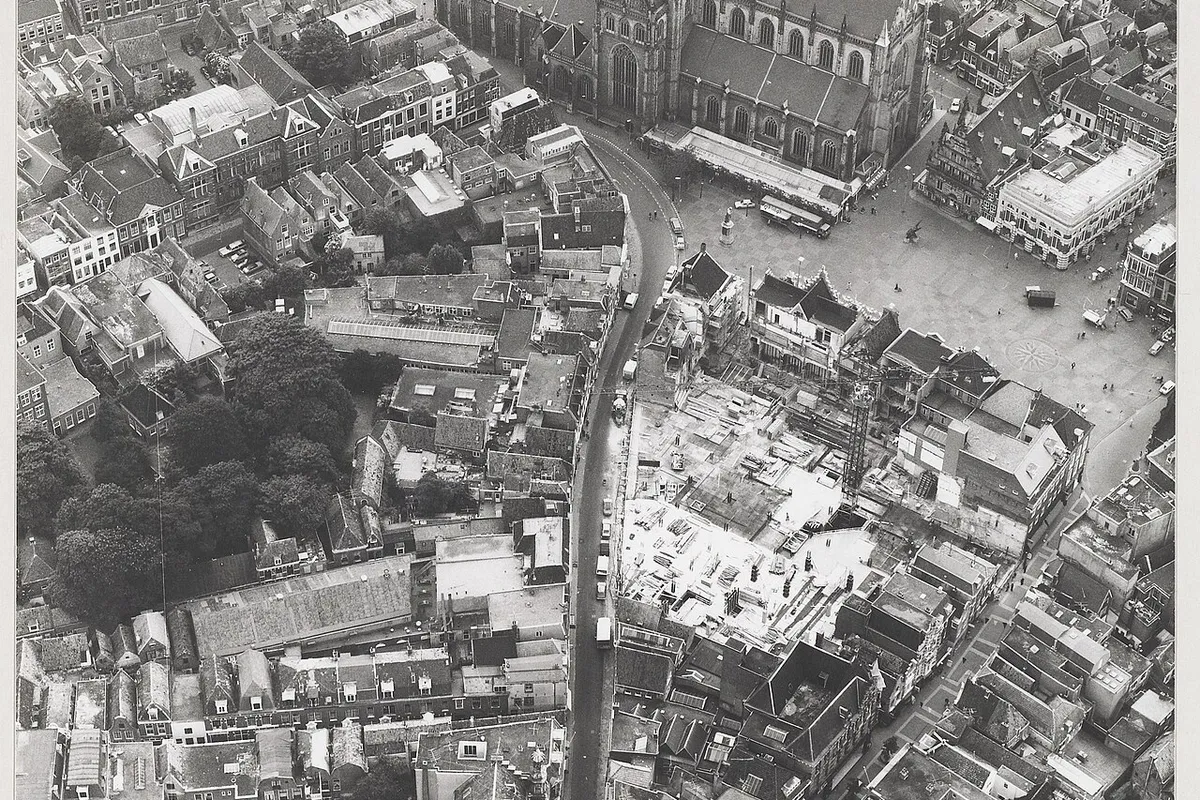
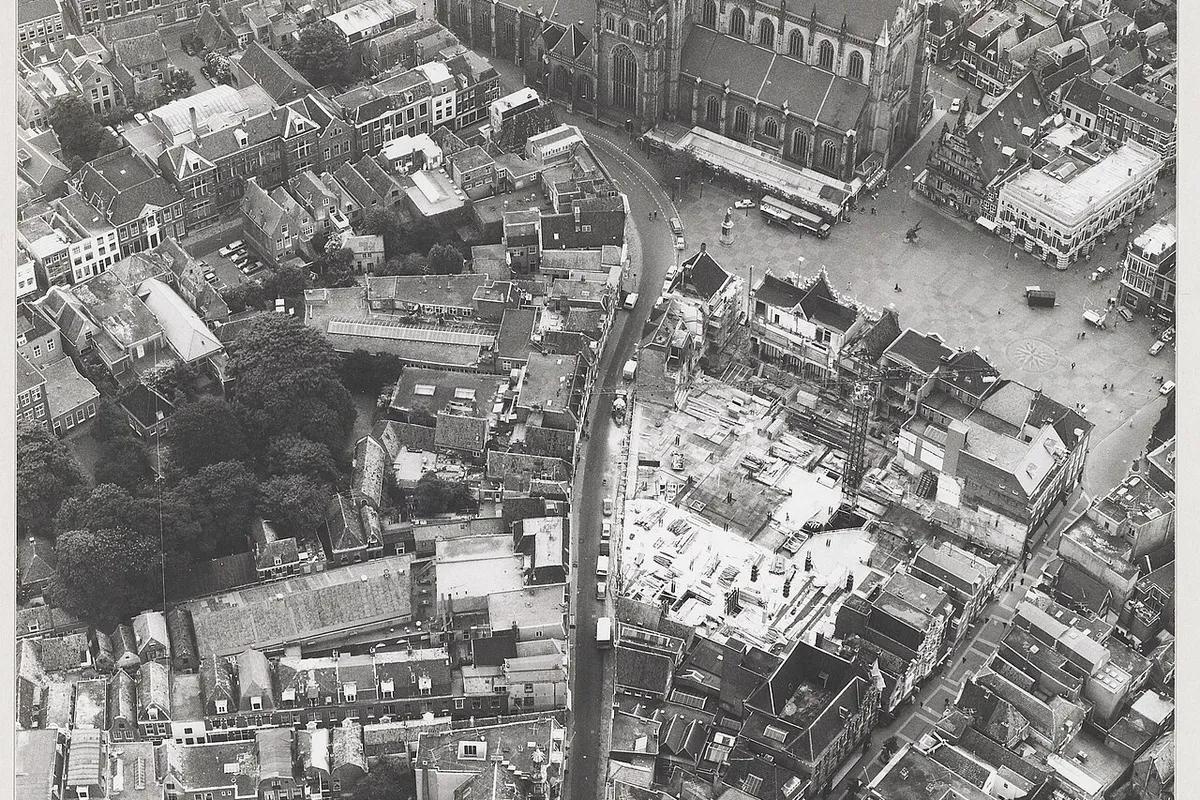 Photo: Haarlem, the Netherlands. Source: Wikimedia Commons.
- Expat population: growing international community; many expats work in Amsterdam and commute
- Main languages spoken: Dutch, English (widely spoken across shops, restaurants, and services)
- Key industries: healthcare, education, creative industries, retail; most expats commute to Amsterdam, Schiphol, or The Hague for corporate roles
- Average commute: Direct trains run from Haarlem Centraal to Amsterdam Centraal and Schiphol; check the NS journey planner for current times
Cost of Living
Haarlem is somewhat cheaper than Amsterdam, but the gap is not large: Haarlem is not a budget alternative to Amsterdam. It is Amsterdam-adjacent pricing with more space and less noise. The city absorbed a great deal of demand from Amsterdam-priced-out renters after 2022, and rents followed upward accordingly.
The section below is split into three parts, because the three parts carry very different levels of certainty. Rent is an editorial market indication — a range, not a measured average, and the number most likely to be wrong for your specific flat. The national fixed costs (health insurance, groceries, utilities, connectivity, transport) are identical in every Dutch city; there is no Haarlem premium on a health insurance policy or a mobile contract. The only genuinely city-specific figures that can be checked line by line are the municipal and water authority charges, which are set annually in published tax ordinances — the one part of a Dutch cost-of-living estimate that is not an estimate at all.
Read in that order, Haarlem’s situation is specific: the rent saving versus Amsterdam is real but modest, a commute eats into a good part of it, and the local tax bill of roughly €49 to €84 a month is among the higher ones in this comparison rather than a consolation.
Rent (base rent, editorial market indication)
| Item | Estimated monthly cost |
|---|---|
| 1-bedroom apartment (Centrum, private rental) | €1,200–€1,700 |
| 1-bedroom apartment (outer neighbourhoods) | €900–€1,300 |
| 2-bedroom apartment (Centrum) | €1,500–€2,200 |
| 2-bedroom apartment (Schalkwijk/Noord) | €1,100–€1,600 |
| Groceries (single person) | €250–€340 |
| Dinner out (mid-range, two people) | €50–€80 |
| Gym membership | €25–€45 |
Editorial market indication for private-sector rentals, ExpatNetherlandsHub, August 2026 — base rent excluding servicekosten and utilities. Individual listings vary widely by neighbourhood, energy label and furnishing.
The honest cost calculation: you typically save €200–€400/month on rent compared to Amsterdam equivalents, but add back €90–€120/month in transport costs if you commute. Net saving is real but not transformational — the stronger argument for Haarlem is quality of life and space rather than pure cost savings.
The spread between the Centrum and the outer neighbourhoods matters more in Haarlem than the spread between Haarlem and Amsterdam. A Schalkwijk or Noord one-bedroom at €900–€1,300 is where the actual saving lives; a Centrum or Vijfhoek address at €1,200–€1,700 puts you close to Amsterdam money without the Amsterdam postcode.
If you are arriving without a full apartment budget, or you want a room or studio while you look for something permanent, the shared-rental market is a separate market with its own platforms.
Disclosure: the link below is an affiliate link. If you sign up through it we may earn a commission at no extra cost to you. It does not change what we recommend.
Search rooms and studios on Kamernet →
The costs that are the same in every Dutch city
These ranges come from this site’s own Cost of Living in the Netherlands 2026 guide and are used unchanged for every city, because none of them vary by postcode.
| Component | Single | Couple | Family (2 adults + 2 children) |
|---|---|---|---|
| Health insurance (basic policy, per adult) | €157 | €314 | €314 (children under 18 free) |
| Groceries | €250–€350 | €400–€550 | €600–€850 |
| Utilities (gas, electricity, water) | €150–€250 | €180–€280 | €220–€350 |
| Internet + mobile | €50–€80 | €70–€110 | €80–€130 |
| Transport (OV + bike) | €100–€200 | €150–€300 | €200–€400 |
The midpoints used in the totals further down are:
- Single: €872/month = 157 + 300 + 200 + 65 + 150
- Couple: €1,334/month = 314 + 475 + 230 + 90 + 225
- Family: €1,729/month = 314 + 725 + 285 + 105 + 300
On health insurance specifically: the 2026 average basic premium is about €157 per month (Rijksoverheid), and the statutory deductible (eigen risico) is €385 per year. Statutory cover is legally identical whichever insurer you choose, so the difference between cheapest and average is pure saving. Use the Health Insurance Wizard to compare — and note that children under 18 are covered free on a parent’s policy, which is why the couple and family insurance rows are the same number.
One Haarlem-specific note on the transport row: the national range assumes local OV plus a bike. If you commute daily to Amsterdam, an NS subscription may sit at the upper end of it, so check the current NS price.
Local charges: the one number that really is city-specific
| Charge 2026 | Single (1 person) | Couple (2 persons) | Family (4 persons) | Ordinance |
|---|---|---|---|---|
| Afvalstoffenheffing (waste levy) | €324.48 | €456.84 | €556.20 | Verordening afvalstoffenheffing 2026, art. 5 |
| Rioolheffing (sewerage) — tenant | €0 | €0 | €0 | Verordening rioolheffing Haarlem |
| Rioolheffing — owner pays | €186.60 | €186.60 | €186.60 | as above |
| Watersysteemheffing ingezetenen (per home) | €162.92 | €162.92 | €162.92 | Hoogheemraadschap van Rijnland |
| Zuiveringsheffing (€95.87 per v.e.) | €95.87 (1 v.e.) | €287.61 (3 v.e.) | €287.61 (3 v.e.) | Hoogheemraadschap van Rijnland |
A three-person household falls between the bands shown: Haarlem’s 2026 waste levy runs €324.48 for one person, €456.84 for two, €522.96 for three and €556.20 for four or more.
Four things here are worth understanding, because they are the things Dutch landlords rarely explain.
The waste levy is the tenant’s bill. Gemeente Haarlem charges it to the household using the property, not to the owner, and it runs on a conventional four-band scale by household size. At €324.48 for a single occupant the €556.20 four-person band is the highest band. If you are moving from Amsterdam with a family, this is one of the few line items that goes up rather than down.
The sewerage charge in Haarlem is levied on the owner, so as a tenant you pay €0. The owner’s portion is €186.60 for 2026. A Haarlem tenant never receives a rioolheffing bill; the landlord pays it. This is worth saying plainly because expats routinely set money aside for a bill that will not arrive.
The waterschap bill is a separate bill from the gemeente bill, and tenants pay both of its parts. Haarlem falls under Hoogheemraadschap van Rijnland, the same water authority as Leiden. Rijnland’s flat watersysteemheffing is €162.92 per home. On top of that comes a zuiveringsheffing of €95.87 per pollution unit for treating your wastewater. Two envelopes, two payment references, two moments of confusion in your first year.
The 1 v.e. / 3 v.e. rule explains the steep jump from single to couple. The zuiveringsheffing is charged per pollution unit (vervuilingseenheid). A home occupied by one person counts as 1 v.e.; a home occupied by more than one person counts as 3 v.e., however many more there are. At €95.87 per unit that is €95.87 for a single occupant and €287.61 the moment a second person registers at the address — the same €287.61 a family of five pays. It is not a per-person charge and it is not an error on your assessment.
Combined, the bills a Haarlem tenant actually receives come to:
| Household | Per year | Per month |
|---|---|---|
| Single | €583.27 | ~€49 |
| Couple | €907.37 | ~€76 |
| Family of four | €1,006.73 | ~€84 |
For objection and remission (kwijtschelding), use Haarlem’s current assessment page. Our cost-of-living guide explains how local charges affect a household budget.
Monthly total by household profile
| Profile | Rent | National fixed costs | Local charges | Total |
|---|---|---|---|---|
| Single, 1-bedroom | €1,450 | €872 | €49 | €2,371 |
| Couple, 1-bedroom | €1,450 | €1,334 | €76 | €2,860 |
| Family of four, 2-bedroom | €1,850 | €1,729 | €84 | €3,663 |
The arithmetic is shown so you can re-add it: 1,450 + 872 + 49 = €2,371; 1,450 + 1,334 + 76 = €2,860; 1,850 + 1,729 + 84 = €3,663.
The rent midpoints used are the Centrum bands (€1,200–€1,700 for a one-bedroom, €1,500–€2,200 for a two-bedroom). If you take a Haarlem-Noord or Schalkwijk address instead, the outer-neighbourhood band of €900–€1,300 cuts roughly €250–€300 off the single total — which is the single largest lever available to you in this city.
What these totals exclude, and you should budget separately for: income tax and the effect of the 30% ruling; one-off setup costs, which in the Netherlands are substantial — a deposit of one to two months’ rent, furnishing an unfurnished Dutch rental (many come without flooring or light fittings), and an agency fee where one applies; childcare; international school fees; and any car. For Haarlem specifically, add the Amsterdam commute if it applies, at NS’s current prices.
Municipal and water authority tariffs above are the 2026 rates as adopted in each body’s own tax ordinance, retrieved from lokaleregelgeving.overheid.nl on 21 August 2026. Rent figures are an editorial market indication, not a measured average. Local rates are reset every year — check your own assessment.
Before committing to a budget, use the Housing Budget Checker to see what your budget covers in Haarlem after Dutch taxes and deductions, and the Cost of Living Calculator to compare your current city against Haarlem before committing. For the income side, the Salary Checker and the 30% Ruling Calculator tell you what actually lands in your account. For the search itself, see Moving to Haarlem: Complete Guide 2026 and finding housing in the Netherlands. If you pay a deposit from a foreign account, compare the provider’s live quote and confirm that the recipient details and transfer route are supported.
Best Neighbourhoods for Expats
Centrum — The historic heart of Haarlem: the Grote Markt, the Bavo church, the narrow shopping streets, the canals. Living here puts you within walking distance of everything — restaurants, the Saturday market, supermarkets, the train station. 1-bedroom rents average €1,200–€1,700. Apartments are often old buildings with high ceilings but sometimes poor insulation. Tourist presence in summer and limited parking are the main irritations. Best for single professionals and couples who want walkable urban living.
Vijfhoek — Sits just west of the Centrum and is arguably the most desirable residential area in all of Haarlem. Same Golden Age architecture as the Centrum but primarily residential — quieter streets, fewer tourists, a strong neighbourhood identity. This is where many of Haarlem’s established families and longer-term residents live. 1-bedroom rents average €1,300–€1,900. Premium prices for the area and limited stock available are the main constraints.
Haarlem-Noord — Sits north of the train tracks and has historically had the reputation of being the less desirable side of the city. That perception is changing. New developments, a growing café and restaurant scene around the Cronjé area, and significantly lower rents are drawing younger residents and expats who want more space for their money. 1-bedroom rents average €950–€1,350. More modern housing stock in some areas, but fewer restaurants and cafés close by.
Schalkwijk — Haarlem’s largest residential district, to the south-east of the city. More 1960s and 70s apartment blocks than canal houses, but good facilities, several solid primary schools, sports clubs, and meaningfully lower rents. Popular with families and with those who moved from Amsterdam specifically for space. 1-bedroom rents average €900–€1,300; 2-bedroom €1,100–€1,600.
Working in Haarlem
The honest picture: Haarlem does not have a large corporate employment hub of its own. The main employers within the city are Spaarne Gasthuis hospital, Hogeschool Inholland (university of applied sciences), local government, and the retail and hospitality sector. For most expats arriving in professional or technical roles, the job market requires commuting — primarily to Amsterdam, Schiphol Airport, or Leiden.
Coworking options within Haarlem are limited compared to Amsterdam. A handful of shared office spaces operate in and around the Centrum, but if remote working is a regular part of your week, you will likely be working from home rather than a coworking space on most days.
For salary benchmarking before or after your move, use the Salary Checker. Use the 30% Ruling Calculator to see how much tax you could save. If you have a foreign degree, check recognition requirements with the Diploma Evaluator.
Getting Registered
Registration is handled by Gemeente Haarlem. The municipality’s registration appointments are booked online; check haarlem.nl for the location. Appointments must be booked online at haarlem.nl.
If you are arriving in the Netherlands for the first time, you must register within five days of arriving. Bring: valid passport or EU ID card, rental contract (or written landlord permission if subletting), birth certificate (apostilled if issued abroad; the municipality says which translations it accepts), and a marriage certificate if applicable (apostilled).
You will receive your BSN (Burgerservicenummer) at the appointment or shortly after. Everything else in the Netherlands depends on it — bank account, health insurance, salary payment. Do not delay this step.
If you already have a BSN and are moving to Haarlem from another Dutch city, notify the gemeente within five days of moving. You can use the online system at haarlem.nl if you have a DigiD.
Not sure which visa you need? Use the Visa Checker to find out. Use the BSN Planner to prepare your documents before your appointment and avoid the common reason for rejected registrations. Planning your integration path? Use the Inburgering Route Planner to see your requirements.
Healthcare & Insurance
The main hospital is Spaarne Gasthuis, with locations in both Haarlem-Noord and the neighbouring town of Hoofddorp. It provides full general hospital services including an emergency department, and has English-speaking staff across most departments.
For primary care, register with a GP (huisarts) after arriving. Several practices in Haarlem have experience with international patients, though availability is not unlimited — expect to spend a week or two finding a practice with capacity. The GP is the gatekeeper to specialist care in the Dutch system; you cannot go directly to a specialist without a referral, which catches many expats off guard.
You must take out Dutch health insurance as soon as possible and no later than 4 months after arriving (government.nl). The average basic premium in 2026 is about €157 per month (Rijksoverheid), with a €385 annual deductible. Use the Health Insurance Wizard to compare policies before you arrive — gaps in coverage are expensive and the waiting period after arrival is not long. Compare Dutch and international expat insurance options with the Insurance Comparison.
Transport
Haarlem Centraal is one of the better-connected mid-sized train stations in the Netherlands. Key connections:
- Amsterdam Centraal, Schiphol, Leiden and The Hague are reachable by train from Haarlem Centraal; use the NS journey planner for current journey times and frequencies
For regular Amsterdam commuters, a train subscription is worth calculating. NS offers an off-peak subscription (Dal Vrij); check NS for the current price. If your employer offers flexible or remote working options, this covers most of your commuting needs. For setting up your OV-chipkaart when you arrive, see the OV-chipkaart guide for expats.
Within Haarlem, cycling is the default — flat terrain, good infrastructure, and short distances make the bike faster than the bus for most journeys. Almost everything in the city is reachable in under fifteen minutes. Zandvoort beach is reachable by bike through the dunes, or by train from Haarlem Centraal; check NS for the summer service.
By car, the A9 connects to the motorway network towards Amsterdam, Schiphol, Alkmaar, and beyond. Parking in the Centrum is paid and expensive (€2.50–€4.00/hour). If you need a car regularly, Schalkwijk or Noord makes the parking situation considerably more manageable than the Centrum.
Getting Started in Haarlem
Moving to Haarlem requires a few first steps. Here are the most important ones:
Arrange payment details — A Dutch bank account is convenient for local payments, but a reachable SEPA account cannot simply be rejected because its IBAN is from another Member State. Wise gives verified customers EUR account details with a non-Dutch euro IBAN (Wise uses a Belgian BIC and address) rather than an NL IBAN. Open a Wise account → Use the Bank Account Comparison to find the right Dutch bank for your situation.
Get health insurance — Dutch health insurance (zorgverzekering) is mandatory. The basic package is the same at every insurer, so compare premium, policy type and supplementary cover. Compare Dutch health insurance options with our Health Insurance Wizard →
Consider expat insurance — If you’re still settling in or working remotely, SafetyWing offers travel medical insurance from USD 62.72 per 4 weeks (Essential plan, ages 18-39, per its site on 6 October 2026). Get SafetyWing coverage →
Plan your budget — Use our free cost of living calculator and housing budget checker to see what you can afford in Haarlem.
Expat Community & Social Life
The Haarlem Expats Facebook group is active and useful for practical questions. There are English-speaking sports clubs, a running club (Haarlem Hash House Harriers for those who know the format), and enough social infrastructure that you can build a life here without constantly travelling to Amsterdam for social contact.
There is a weekly market on the Grote Markt (check haarlem.nl for the current days) — worth adding to your routine from the first week. The Frans Hals Museum, the Teylers Museum (housed in an 18th-century building on the Spaarne), and the Corrie ten Boom House give the city a cultural weight that is disproportionate to its size.
The Zandvoort beach is a genuine amenity if you live in Haarlem. You can reach Zandvoort aan Zee by train from Haarlem Centraal (check NS for the seasonal service) or by bike through the dunes. Having a North Sea beach within easy reach is not something most Dutch cities can offer.
Haarlem vs Amsterdam: The Honest Assessment
If you work in central Amsterdam or at Schiphol, the commute from Haarlem is manageable. Fifteen minutes on the train is less friction than many Amsterdam residents deal with commuting across the city on a tram that gets stuck in traffic.
The social life in Haarlem is smaller but the quality of daily life — space, quiet, access to the market, the beach, the parks — is higher in ways that matter more once you have been in the Netherlands a few years and the novelty of Amsterdam wears off.
The honest negative: Haarlem has absorbed a lot of Amsterdam demand since 2022, and rents have risen accordingly. The savings versus Amsterdam are real but smaller than they were three or four years ago. If pure cost savings are the goal, Rotterdam or Breda are stronger bets. If quality of daily life combined with Amsterdam job market access is the goal, Haarlem is one of the better answers.
Housing Search: Practical Advice
Haarlem’s rental market is competitive for well-located Centrum and Vijfhoek properties. Pararius and Funda are the main platforms. Local Haarlem agencies — Rotsvast, ERA Haarlem, and smaller independent makelaars — often have listings that appear before or instead of the national platforms, so searching locally as well as nationally is worth doing.
Properties in the Centrum and Vijfhoek under €1,500/month for a one-bedroom receive multiple applications quickly. Noord and Schalkwijk properties are more manageable. Standard requirements: recent payslips, employment contract, employer declaration confirming salary.
One practical note: Haarlem has a significant proportion of older housing stock. Canal-house apartments in the Centrum look beautiful but often have poor insulation, steep stairs with no lift access, and higher heating bills in winter. Check the energy label (energielabel) before signing — a D or E-rated property will cost meaningfully more to heat than an A or B-rated one.
Daily Life in Haarlem
Haarlem’s daily life has a rhythm that is easier to describe than to expect from reading about it. The city is large enough to have all the amenities you need without requiring trips to Amsterdam for basic things. There is a weekly outdoor market on the Grote Markt (check haarlem.nl for the current days). The covered market at the Boter- and Vismarkt has everyday food shops.
The independent retail scene on the Zijlstraat, Gierstraat, and surrounding streets survived the pressure from chain retail better than most Dutch city centres. You can buy good bread, reasonable wine, and well-made furniture within ten minutes of the Grote Markt without going to the same chains you find everywhere else.
Zandvoort beach is the piece of Haarlem’s geography that surprises new arrivals most. Zandvoort aan Zee is reachable by train from Haarlem Centraal (check NS for the seasonal service) or by bike through the dune landscape. The dunes between Haarlem and the coast are part of the South Kennemerland National Park — the cycling route through them is one of the genuinely good cycling experiences near a Dutch city, passing through heathland and dune forest rather than polder.
The Frans Hals Museum is one of the better city museums in the Netherlands — modest in scale but strong in content, with a permanent collection of Golden Age Haarlem painting in a building that is itself a former almshouse. The Teylers Museum, a ten-minute walk from the station along the Spaarne canal, is housed in an 18th-century cabinet-of-curiosities building and is unlike anything else in the Netherlands.
Settling In: The First Month
- Confirm housing with landlord permission to register at the address
- Book registration at Gemeente Haarlem, the location shown on haarlem.nl
- Attend appointment, receive BSN
- Open Dutch bank account
- Take out health insurance as soon as possible, and no later than 4 months after arrival
- Register with a GP; several Haarlem practices have English-speaking capacity
- Apply for DigiD after BSN is confirmed
Check haarlem.nl for the location, opening times and language support. Bring your full document set — the list is: passport, rental contract, birth certificate (apostilled if issued abroad; ask the municipality which translations it accepts), marriage certificate if applicable.
Frequently Asked Questions
Is Haarlem actually cheaper than Amsterdam once you add the commute?
Marginally. Rents in Haarlem are somewhat lower than in Amsterdam, but a daily Amsterdam commute adds back part of the saving (check NS for the current price of a subscription or single journey). The genuine saving comes from taking a Noord or Schalkwijk address at €900–€1,300 rather than a Centrum one.
Do Haarlem tenants pay the sewerage charge?
No. Gemeente Haarlem levies the rioolheffing on the property owner only — €186.60 for 2026 under the Verordening rioolheffing Haarlem. If you rent, you never receive that bill; your landlord pays it. It is worth knowing because a lot of new arrivals budget for a sewerage charge that will not arrive. What you do pay as a tenant is the waste levy and both parts of the water authority bill.
How much is the waste tax in Haarlem in 2026?
Haarlem charges a four-band household levy: €324.48 for one person, €456.84 for two, €522.96 for three and €556.20 for four or more, under the Verordening afvalstoffenheffing 2026, art. 5 (lokaleregelgeving.overheid.nl). It is charged to the household using the property, so tenants pay it directly.
What does a single expat need per month in Haarlem?
On this site’s figures, about €2,371 a month: €1,450 rent (midpoint of the €1,200–€1,700 Centrum one-bedroom market indication), €872 of national fixed costs from the Cost of Living in the Netherlands 2026 guide, and €49 a month of local charges (€583.27 a year in waste levy and Rijnland water authority charges). An outer-neighbourhood flat brings that down by roughly €250–€300. The figure excludes income tax, the 30% ruling, one-off setup costs, and an Amsterdam commute.
Which water authority covers Haarlem, and how much does it charge?
Hoogheemraadschap van Rijnland, the same authority as Leiden. For 2026 it charges a flat watersysteemheffing of €162.92 per home — among the highest of the ten cities here — plus a zuiveringsheffing of €95.87 per pollution unit. A single occupant counts as 1 v.e. (€95.87); any household of two or more counts as 3 v.e. (€287.61), regardless of how many more. Both parts are the tenant’s bill and arrive separately from the municipal one.