In this guide
The Hague at a Glance
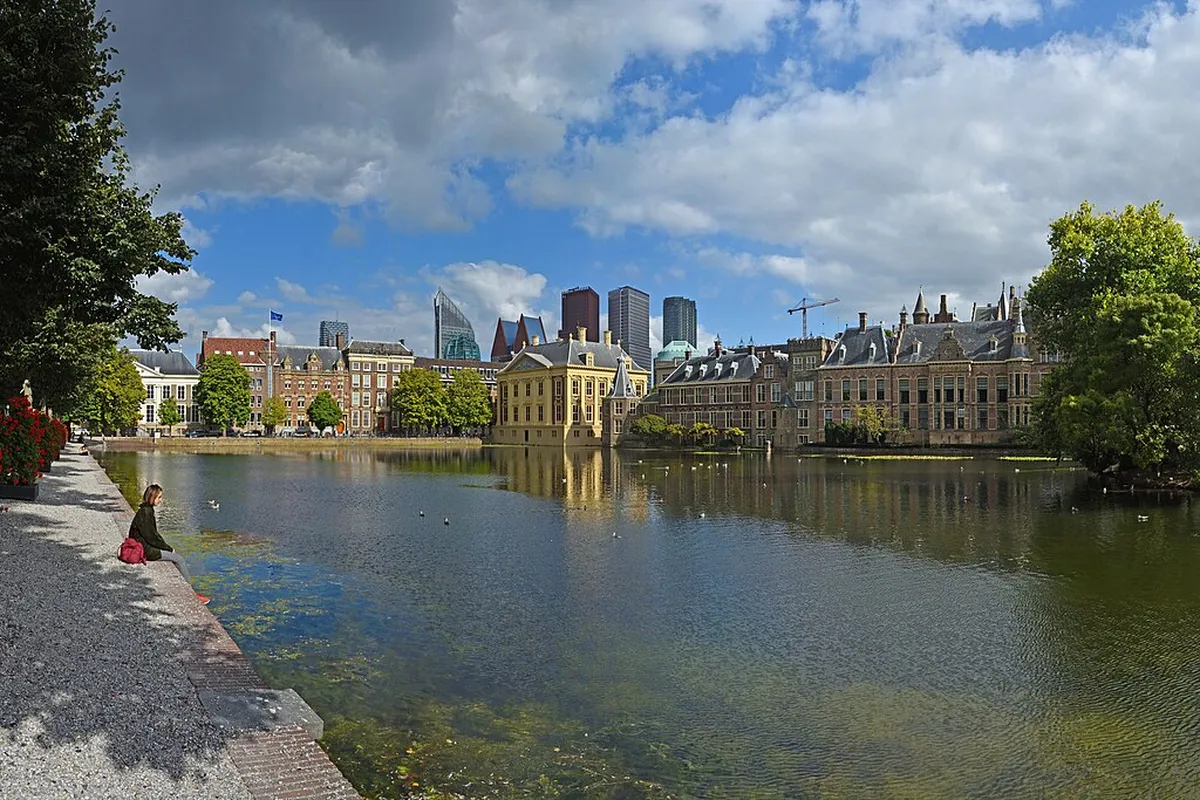 Photo: The Hague, the Netherlands. Source: Wikimedia Commons.
- Population: 568,301 (municipality; CBS, end of August 2026)
- Institutions: the International Court of Justice has its seat in The Hague (icj-cij.org)
- Local charges for a tenant in 2026: about EUR 665 to EUR 991 per year, depending on household size (see below)
The Hague is a coastal city with a large international community. This page covers the costs that are specific to the city, how to register and the first steps after arrival. Rents, neighbourhood prices, schools and commuting times change quickly and differ per listing, so check current listings and the provider’s own website for those.
Cost of Living
Most costs do not depend on the city. The one charge that does is the set of local taxes a tenant receives each year. This section shows those, plus the national health insurance figures.
Health insurance
The Rijksoverheid puts the average basic premium for 2026 at €157 per month. The mandatory deductible (eigen risico) is €385 per year. Take out Dutch health insurance as soon as you can, and no later than 4 months after arriving. Cover applies from the day you arrived (Government.nl). The statutory package is the same at every insurer, so you choose on price and service. Use the Health Insurance Wizard to compare options.
Local charges
Two separate annual bills reach a tenant in The Hague: one from the gemeente and one from the Hoogheemraadschap van Delfland. They do not arrive together.
| Charge 2026 | 1 person | 2 persons | 3 persons | 4+ persons | Ordinance |
|---|---|---|---|---|---|
| Afvalstoffenheffing (waste levy) | €412.56 | €463.80 | €507.48 | €507.48 | Verordening afvalstoffenheffing Den Haag 2021, art. 4 |
| Rioolheffing, owner | €195.40 | €195.40 | €195.40 | €195.40 | Verordening rioolheffing Den Haag 2021 |
| Rioolheffing, tenant (normal use) | €0 | €0 | €0 | €0 | as above |
| Watersysteemheffing ingezetenen (Delfland) | €137.51 | €137.51 | €137.51 | €137.51 | Delfland 2026 |
| Zuiveringsheffing (Delfland, €115.33 per pollution unit) | €115.33 | €345.99 | €345.99 | €345.99 | Delfland 2026 |
Waste levy. The base rate is €507.48 per property. A property used by one person gets a reduction of €94.92 and one used by two persons a reduction of €43.68, which gives €412.56 and €463.80. The household situation on 1 January decides (or the start of the liability, if later).
Sewerage. The ordinance charges the owner a fixed €195.40 per year. There is also a user part of €267.35 per 500 m3 of water, but only for water above the first 500 m3 per year, which a normal household does not reach. A tenant therefore normally pays nothing for rioolheffing.
Water board. The watersysteemheffing for residents is a fixed €137.51 per home. The zuiveringsheffing is charged per pollution unit (vervuilingseenheid, v.e.). A home used by one person counts as 1 v.e. and any other home as 3 v.e. At €115.33 per unit that is €115.33 for a single person and €345.99 for two or more.
What a tenant receives in local charges in 2026:
| Household | Per year | Per month |
|---|---|---|
| Single | €665.40 | about €55 |
| Couple | €947.30 | about €79 |
| Family of four | €990.98 | about €83 |
Calculation: single 412.56 + 137.51 + 115.33 = 665.40; couple 463.80 + 137.51 + 345.99 = 947.30; family 507.48 + 137.51 + 345.99 = 990.98. Rates are the 2026 rates in the ordinances above (lokaleregelgeving.overheid.nl, checked 7 October 2026). Local rates are reset every year, so check your own assessment. If an assessment looks wrong, or you may qualify for remission (kwijtschelding), ask the municipality.
To work out what rent and living costs you can afford, use the Housing Budget Checker, the Cost of Living Calculator, the Net Salary After Tax Calculator and the 30% Ruling Calculator. For the practical side of finding a property, see Moving to The Hague: Full Guide 2026 and finding housing in the Netherlands.
If a whole apartment is not an option at first, you can look for a room or studio.
Disclosure: the link below is an affiliate link. If you sign up we may earn a commission, at no extra cost to you. See how we earn.
Search rooms and studios on Kamernet →
Working in The Hague
If you need a work permit or want to check whether your salary meets the highly skilled migrant threshold, use the Salary Checker. The 30% Ruling Calculator shows what the 30% ruling could mean for your take-home pay. If you have a foreign degree, check recognition requirements with the Diploma Evaluator. See also Working in the Netherlands.
Getting Registered
You register with the Gemeente Den Haag. If you will stay in the Netherlands for more than 4 months, you must register with the municipality within 5 days of arrival (Government.nl). Check the municipality’s website for how to make an appointment and which documents you need. You receive your BSN when you register (Government.nl).
Use the BSN Planner to prepare your documents. Not sure which visa you need? Use the Visa Checker. Planning your integration path? The Inburgering Route Planner shows your requirements.
Healthcare & Insurance
Dutch health insurance is mandatory. Take it out as soon as you can and no later than 4 months after arriving, with cover from the day you arrived (Government.nl). The average basic premium is €157 per month, with a €385 eigen risico. If you work for an international organisation or have a diplomatic status, ask your employer which arrangement applies to you. Use the Health Insurance Wizard to compare Dutch policies and the Insurance Comparison for international options.
Transport
For routes and travel times, use the NS journey planner and the local operator’s planner. The OV-chipkaart guide for expats explains how public transport payment works.
Getting Started in The Hague
Arrange payment details. A Dutch bank account is convenient for local payments, but a reachable SEPA account cannot simply be rejected because its IBAN is from another Member State. Wise gives verified customers EUR account details with a non-Dutch euro IBAN (Wise uses a Belgian BIC and address) rather than an NL IBAN. Open a Wise account →
Get health insurance. The basic package is the same at every insurer, so compare premium, policy type and supplementary cover. Compare Dutch health insurance options with our Health Insurance Wizard →
Consider expat insurance. If you are still settling in or working remotely, SafetyWing provides global coverage from USD 62.72 per 4 weeks. Get SafetyWing coverage →
Compare banks. Use the Bank Account Comparison to find the right Dutch bank for your situation.
Plan your budget. Use the free cost of living calculator and housing budget checker to see what you can afford.
Settling In: The First Month
- Confirm housing with a lease that lets you register at the address.
- Register with the Gemeente Den Haag within 5 days of arrival if you stay longer than 4 months.
- Receive your BSN at registration.
- Open a bank account.
- Take out health insurance within 4 months of arrival. Diplomatic personnel should confirm with their employer whether Dutch insurance applies.
- Apply for DigiD once you have your BSN.
Related Guides
Frequently Asked Questions
How much is the waste tax in The Hague in 2026?
The afvalstoffenheffing in The Hague for 2026 is EUR 412.56 a year for a one-person household, EUR 463.80 for two people and EUR 507.48 for three or more. EUR 507.48 is the base rate; one-person households get a reduction of EUR 94.92 and two-person households EUR 43.68. The source is the Verordening afvalstoffenheffing Den Haag 2021, article 4, which applies to 2026 (lokaleregelgeving.overheid.nl, CVDR650905). The levy is charged to the person who uses the property, so as a tenant it is yours.
Do tenants pay rioolheffing in The Hague?
Normally not. The owner pays the fixed part of EUR 195.40 per year in 2026. The user part is EUR 267.35 per 500 m3 of water, but only for water above the first 500 m3 per year, so a normal household does not reach it (Verordening rioolheffing Den Haag 2021, CVDR650733).
Why can my water board bill differ from a friend's in another city?
Each water authority sets its own rates. The Hague falls under the Hoogheemraadschap van Delfland, which charges a watersysteemheffing of EUR 137.51 per home and EUR 115.33 per pollution unit for the zuiveringsheffing in 2026. A home used by one person counts as 1 pollution unit and a home used by more than one person as 3.
What do local charges add up to for a tenant in The Hague?
With the 2026 rates, EUR 665.40 a year for a single person, EUR 947.30 for a couple and EUR 990.98 for a family of four, in waste levy, watersysteemheffing and zuiveringsheffing. That is about EUR 55, EUR 79 and EUR 83 a month. Rent, health insurance and other costs come on top.