I have lived in three Dutch cities — Amsterdam, Utrecht, and now Leiden — and I have helped hundreds of expats choose where to settle in the Netherlands. My honest view: most people who ask “which city should I move to?” are asking the wrong question. The right question is “which city fits my situation?”
Amsterdam is not automatically the answer, despite what most relocation guides tell you. It is expensive, competitive, and can feel exhausting after a while. For the right person, it is brilliant. For others, Rotterdam or Utrecht will make them far happier — and considerably richer.
Below I rank the eight cities I would genuinely consider recommending to an expat moving to the Netherlands in 2026. I have used six criteria: rent costs, job market, English-friendliness, quality of life, international community size, and transport connections. I will be direct about which cities have real downsides.
Before diving in, if you are still working out what you can afford, use our Rent Affordability Calculator to figure out your realistic budget first. And for a full breakdown of what things cost day-to-day, see the cost of living guide for the Netherlands.
Quick Comparison: All 8 Cities at a Glance
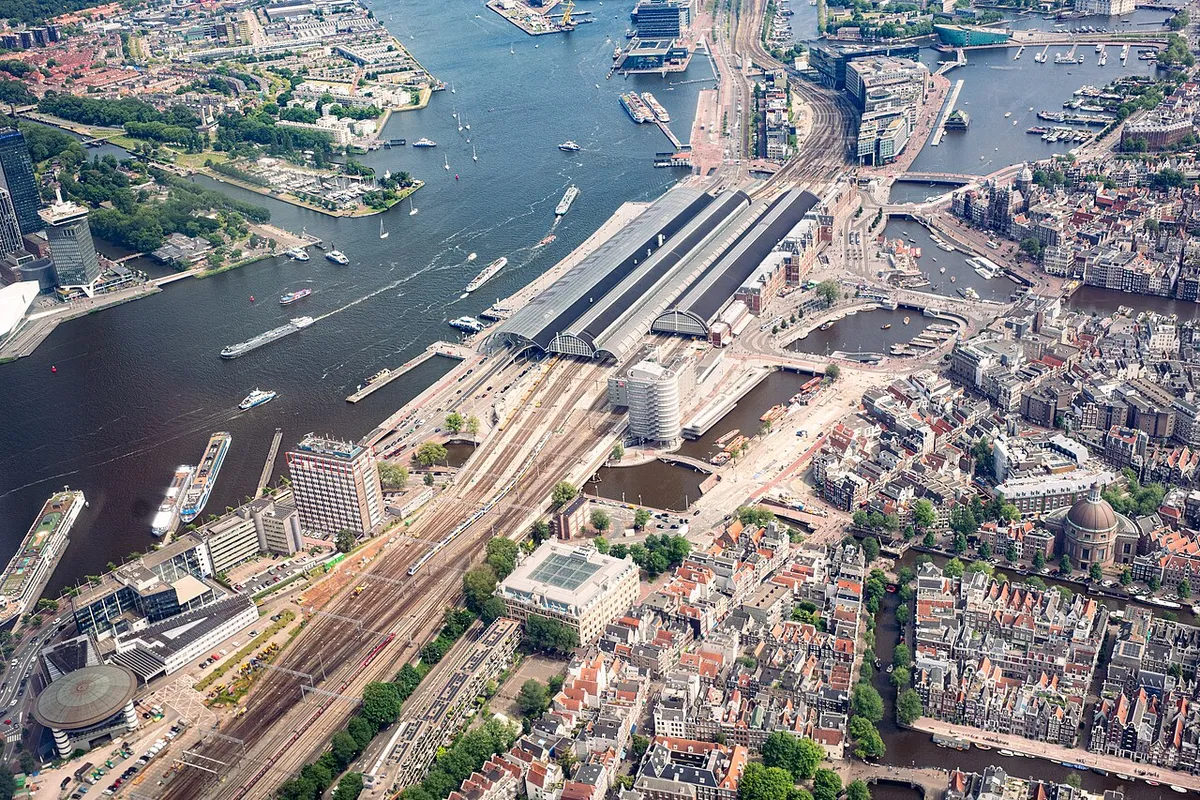 Photo: Amsterdam, the Netherlands. Source: Wikimedia Commons.
| City | 1-Bed Rent (2026) | English Level | Job Market | Best For | My Rating |
|---|---|---|---|---|---|
| Amsterdam | EUR 1,500–1,800 | Excellent | Very Strong | International careers, networking | 8/10 |
| Rotterdam | EUR 1,100–1,400 | Good | Strong | Affordable city life, logistics, port sector | 8.5/10 |
| The Hague | EUR 1,100–1,400 | Very Good | Good (gov/NGO) | Government, diplomacy, international law | 7.5/10 |
| Utrecht | EUR 1,200–1,500 | Good | Strong | Families, work-life balance, central location | 9/10 |
| Eindhoven | EUR 1,000–1,300 | Good (tech sector) | Very Strong (tech) | Engineers, designers, tech workers | 8.5/10 |
| Leiden | EUR 1,100–1,350 | Good | Moderate | Academics, researchers, quiet city life | 8/10 |
| Groningen | EUR 900–1,200 | Good | Moderate | Budget-conscious, students, young professionals | 7.5/10 |
| Maastricht | EUR 900–1,150 | Good | Moderate | EU institutions, culture, slower pace | 7/10 |
Rent figures are approximate 2026 averages for an unfurnished one-bedroom apartment in a decent central location. Prices in Amsterdam and Utrecht have continued rising; Groningen and Maastricht remain the most affordable options.
How I Ranked These Cities
I did not invent a complicated scoring system. I used the six factors that come up most often when expats tell me why they love or hate where they live:
1. Cost of living — primarily rent, since that is where the biggest differences appear. For a full picture, read the cost of living in the Netherlands guide.
2. Job market — both the number of opportunities and whether those jobs are accessible in English. Amsterdam and Eindhoven lead here, but for very different industries.
3. English-friendliness — not just whether people speak English (most Dutch people do), but whether you can actually function in English at city hall, with your landlord, at the GP, and in your children’s school.
4. Quality of life — green space, cycling infrastructure, safety, cultural life, how it actually feels to live there rather than visit.
5. International community — having a network of other expats matters, especially in your first year. Some cities have built-in expat communities; others require more effort.
6. Transport links — proximity to Schiphol, train connections to other cities, ease of getting around without a car.
I also factor in housing availability. The Dutch housing market is tight everywhere, but some cities are tighter than others. For a detailed strategy on finding a place, see the finding housing in the Netherlands guide.
#1 Amsterdam
Rent: EUR 1,500–1,800/month (1-bed)
Amsterdam is not my personal favourite city to live in — I left after two years — but I put it first because, for the right person, it genuinely is the best option in the Netherlands.
The job market is unmatched. Tech companies, banks, media firms, startups: Amsterdam has more English-language jobs than the other seven cities combined. If you are early in your career, building a network, or moving without a job offer, Amsterdam gives you the best odds.
The international community is enormous. There are more than 180 nationalities living here. You will find expat networks, international schools, foreign-language medical practices, and — yes — entire neighbourhoods where you can go weeks without needing Dutch.
The downsides are real. Rent is EUR 1,500–1,800 for a decent one-bedroom, and you will compete with dozens of applicants for each listing. Scams are common. Read the Funda vs Pararius guide before you search, and see the dedicated moving to Amsterdam guide for a step-by-step approach.
Amsterdam also feels crowded and, in parts, quite touristy. The canal belt is genuinely beautiful, but areas like De Pijp and Oud-West have become very expensive and feel more like lifestyle brands than actual neighbourhoods.
Amsterdam is right for you if: You are moving for a specific international job, you want the largest possible social scene from day one, or you work in finance, tech, or media.
Amsterdam is wrong for you if: You have a limited budget, you dislike crowded urban environments, or you are moving with a family that needs outdoor space.
Read the full Amsterdam city guide for neighbourhood breakdowns, school options, and more.
#2 Rotterdam
Rent: EUR 1,100–1,400/month (1-bed)
Rotterdam is, in my opinion, the most underrated city for expats in the Netherlands. When I talk to people who have lived here for a few years, they almost always say the same thing: they thought it would be their temporary stop before Amsterdam, and then they never left.
The city has been dramatically rebuilt since the Second World War, which means it looks different from the rest of the Netherlands — more architectural ambition, more space, less chocolate-box prettiness. Some people find that off-putting. I find it genuinely exciting.
Rent runs EUR 1,100–1,400 for a one-bedroom, which is EUR 300–500 less per month than Amsterdam. That is EUR 3,600–6,000 a year in savings for a comparable place. The train to Amsterdam takes about 40 minutes, which makes Rotterdam viable even for workers who need to be in Amsterdam occasionally.
The job market focuses on logistics, engineering, shipping, and the port sector — Europe’s largest port is here. There is also a growing technology and startup scene, and multinationals including Shell, Unilever, and a number of shipping firms are based in or near Rotterdam. English is widely spoken, though not quite as universally as in Amsterdam.
The international community is younger and growing fast. Rotterdam has attracted a lot of young international talent who were priced out of Amsterdam and found they actually preferred the energy here.
Read the moving to Rotterdam guide for practical detail on neighbourhoods and registration.
Rotterdam is right for you if: You work in logistics, shipping, engineering, or tech; you want a real city feel without Amsterdam prices; you value architecture and cultural life.
Rotterdam is wrong for you if: You specifically need Amsterdam’s job market or want the traditional Dutch canal-city aesthetic.
Full details in the Rotterdam city guide.
#3 The Hague (Den Haag)
Rent: EUR 1,100–1,400/month (1-bed)
The Hague is the seat of the Dutch government and home to more international organisations than almost any other city in Europe. The International Court of Justice, the International Criminal Court, Europol, and dozens of embassies are all here. If you work in diplomacy, international law, government, or an NGO, The Hague is not just a good option — it is the obvious one.
Rents are on a par with Rotterdam at EUR 1,100–1,400 for a one-bedroom, but the overall feel of the city is different: calmer, greener, more spread out. There is a genuine international expat community here, built around the legal and diplomatic institutions. English is widely spoken across all levels of daily life.
The city also has a beach. Scheveningen is a 20-minute tram ride from the centre, which sounds trivial until you have been through a Dutch winter and you want to walk by the sea.
The downside is that The Hague can feel quiet. There is less of the buzz that Amsterdam and Rotterdam have, and the job market outside government and international organisations is more limited. If you are not working in that sector, The Hague may feel like an odd fit.
The Hague is right for you if: You work in government, diplomacy, international law, or an NGO; you want good English-language services; you have children and want access to international schools including the European School.
The Hague is wrong for you if: You work in tech, finance, or media and need a broader job market. The train to Amsterdam takes about an hour, which is manageable but not ideal for regular commuting.
See the The Hague city guide for more.
#4 Utrecht
Rent: EUR 1,200–1,500/month (1-bed)
Utrecht is my top recommendation for most expats who are not tied to a specific industry or employer. It is central — Amsterdam is 25 minutes by train, Rotterdam 40 minutes, The Hague 45 minutes — which means you get the benefits of a smaller, calmer city without being cut off from the larger job markets.
The city itself is beautiful in a way that feels genuine rather than preserved. The canals are lower than in Amsterdam, with terraced restaurants along the water level that become very popular in summer. The cycling infrastructure is excellent even by Dutch standards. Utrecht Centraal is the busiest train station in the Netherlands, which tells you everything about how connected the city is.
Utrecht has a large university (around 35,000 students) which keeps the city young and gives it a steady supply of cafés, cultural events, and international people. The job market is strong in healthcare, education, insurance (several major insurers are headquartered here), and professional services.
Rents sit at EUR 1,200–1,500 for a one-bedroom — slightly higher than Rotterdam and The Hague, but lower than Amsterdam. The housing market is competitive, so start your search early. See the finding housing guide for strategy.
For families specifically, Utrecht has excellent international school options and a city centre that is genuinely safe and pleasant for children.
Utrecht is right for you if: You value central location and flexibility; you are moving with a family; you want a city with a strong quality of life and do not need Amsterdam’s specific job market.
Utrecht is wrong for you if: You need to be in Amsterdam daily and cannot handle the commute costs.
More detail in the Utrecht city guide.
#5 Eindhoven
Rent: EUR 1,000–1,300/month (1-bed)
Eindhoven will not appeal to everyone, but for one specific type of expat — the engineer, the product designer, the semiconductor specialist — it is genuinely the best city in the Netherlands to live in.
ASML, Philips (still headquartered here), NXP Semiconductors, DAF Trucks, and a dense cluster of high-tech suppliers are all based in the Eindhoven region. The Brainport Eindhoven area is one of the most concentrated technology ecosystems in Europe. Salaries in this sector are good, and the cost of living is significantly lower than Amsterdam or Utrecht.
Rent is EUR 1,000–1,300 for a one-bedroom — the most affordable among the major tech hubs in the country. The tech industry operates largely in English, and ASML in particular has built an entire infrastructure around international employees, including housing support and relocation assistance.
The city itself is smaller (about 240,000 people) and less obviously beautiful than Amsterdam or Utrecht, but it has improved significantly in the last decade. The design scene is strong — the Dutch Design Week is held here every October. There is a decent restaurant and bar scene, particularly around the Stratumseind area.
The downsides: Eindhoven is further from Schiphol (about 90 minutes by train) and has a smaller international social scene outside the tech sector. If your social life depends on meeting a wide range of international professionals from different industries, you will feel that more here.
Eindhoven is right for you if: You work in engineering, semiconductors, high-tech manufacturing, or product design; you want a strong salary-to-cost ratio; you are moving with a partner or family and value affordability.
Eindhoven is wrong for you if: You want a vibrant city centre comparable to Amsterdam or Rotterdam, or you need regular quick access to Schiphol.
Full breakdown in the Eindhoven city guide.
#6 Leiden
Rent: EUR 1,100–1,350/month (1-bed)
Leiden is the city I moved to after Utrecht, and I have not regretted it. It is small — about 125,000 people — historic, and sits between Amsterdam (35 minutes by train) and The Hague (15 minutes). You are close to Schiphol (20 minutes). You get access to two major cities without living in either.
The city is dominated by Leiden University, one of the oldest in Europe, which means the academic and research community is strong. Leiden Bio Science Park is one of the largest life sciences clusters in Europe, and pharma and biotech companies including Johnson & Johnson (Janssen) and a number of smaller biotech firms are based here.
Outside academic and life sciences work, the local job market is modest. Most Leiden expats commute to The Hague or Amsterdam for work. That is perfectly practical — trains run frequently and reliably — but it is worth knowing before you move.
Rent is EUR 1,100–1,350, comparable to Rotterdam and The Hague. The housing market is tight because of high student demand.
Leiden is right for you if: You work in academic research, life sciences, or pharma; you value a quiet, beautiful city; you want proximity to The Hague or Amsterdam without paying their rents.
Leiden is wrong for you if: You need a large local job market or want an active nightlife scene.
See the Leiden city guide for neighbourhood and practical detail.
#7 Groningen
Rent: EUR 900–1,200/month (1-bed)
Groningen is far north — and I mean that literally. It takes about two hours by train to reach Amsterdam, and Schiphol is not a practical commute. For many expats, this is a dealbreaker, and I think that is fair. Geography matters.
But if your job is in Groningen, or you are studying at the University of Groningen, or you are specifically drawn to a smaller city with a strong student culture and genuinely affordable rents, Groningen delivers.
At EUR 900–1,200 for a one-bedroom, it is one of the cheapest major cities in the Netherlands. The student population (around 60,000 students in a city of 240,000) keeps the social scene active and the city young. There are good cafés, a decent music scene, and enough international people that English is useful for daily life, even if Dutch is more necessary here than in Amsterdam.
The main employers are the university, the university medical centre, and energy companies (Groningen was the centre of Dutch gas extraction, which has now wound down but left behind related businesses). The job market in other sectors is limited.
Groningen is right for you if: You are a student, a researcher, or employed at the university; you want the lowest possible cost of living; you are comfortable being far from the Randstad.
Groningen is wrong for you if: You travel frequently for work, need access to Schiphol regularly, or depend on frequent contact with clients or colleagues in Amsterdam or Rotterdam.
More in the Groningen city guide.
#8 Maastricht
Rent: EUR 900–1,150/month (1-bed)
Maastricht feels different from the rest of the Netherlands. It is in the south, near the Belgian and German borders, and it has a distinct identity — more Catholic, more relaxed, more continental European in a way that the Protestant, merchant-culture north does not quite match. Some expats love this. Others find it a bit isolating.
The city is beautiful, undeniably. The old centre is intact, the food culture is genuinely good (the south takes eating seriously in a way that Amsterdam sometimes does not), and the pace of life is slower. Rent at EUR 900–1,150 is the joint cheapest alongside Groningen.
Maastricht University has a strong international reputation and runs many courses in English, which brings a cosmopolitan student population. The European Institute of Public Administration is based here. For EU-facing roles and certain academic positions, Maastricht has specific advantages.
The practical drawbacks are significant: Amsterdam is two and a half hours by train. Schiphol is not a practical option for regular travel — most Maastricht residents fly from Eindhoven Airport or Liège in Belgium instead. The local job market outside the university and a handful of multinationals is limited.
Maastricht is right for you if: You are drawn to the slower pace and cultural character of the south; you work at the university or in an EU-related institution; you value affordability and quality of life over career opportunities.
Maastricht is wrong for you if: You need regular access to Amsterdam or Schiphol, or you work in a sector where the Dutch job market is concentrated in the Randstad.
See the Maastricht city guide for practical detail.
Best City by Situation
Rather than a generic ranking, here is my honest scenario-by-scenario advice:
Best for tech workers and engineers
Eindhoven, without question. ASML alone employs tens of thousands of engineers from around the world. The salary-to-rent ratio is the best of any city on this list. If you are being recruited by ASML, Philips, NXP, or a supplier in the ecosystem, Eindhoven is where you should be.
Best for families with children
Utrecht first, The Hague second. Utrecht has good international school options, excellent cycling infrastructure, a central location, and a city centre that is genuinely pleasant for children. The Hague is the better choice if you need access to the European School or if your employer is an international organisation.
Best on a budget
Groningen if your job is there or you are studying. Maastricht if you prefer the south. Both offer rents around EUR 900–1,200, which is EUR 500–600 less per month than Amsterdam. That difference adds up to EUR 6,000–7,200 per year. If you are on a lower salary or saving aggressively, these cities make a real financial difference. Use the Rent Affordability Calculator to see how different cities fit your budget.
Best for nightlife and social life
Amsterdam has the widest range and the largest international crowd, but Rotterdam is a close second with a younger, more local energy and a growing international scene. If you want to avoid the tourist-heavy nightlife of Amsterdam’s centre, Rotterdam will suit you better.
Best for work-life balance
Utrecht and Leiden. Both are smaller than Amsterdam and Rotterdam, have good green space nearby, are easy to cycle around, and offer access to larger cities without being consumed by them. In both cities, the commute to work is typically short, housing is not impossible to find, and there is still enough going on culturally that you do not feel like you are giving something up.
Best for government and international organisations
The Hague. There is no competition here. If you work for an international court, a UN body, an embassy, or a Dutch government ministry, The Hague is the sensible choice. Amsterdam and Rotterdam simply do not have that ecosystem.
What About Smaller Cities?
The eight cities above cover most expat situations, but the Netherlands has several smaller cities that are worth considering depending on your circumstances.
Delft — 15 minutes from The Hague by train, home to Delft University of Technology. If you work in engineering or research and want a smaller, quieter base than Rotterdam or The Hague, Delft is excellent. It is extremely bicycle-friendly and genuinely beautiful.
Haarlem — 20 minutes from Amsterdam by train and popular with expats who work in Amsterdam but want a quieter home base. Rents are lower than Amsterdam but not dramatically so. It has a well-preserved historic centre and a strong local community.
Den Bosch (s-Hertogenbosch) — a pleasant mid-sized city in the south, well connected to both Amsterdam (1 hour) and Eindhoven (30 minutes). Good for families who want more space.
Breda — near the Belgian border, with good transport links and a growing professional services sector. Less obvious as an expat destination but increasingly considered by people relocating to the southern Netherlands.
For moving practicalities in any Dutch city, the complete guide to moving to the Netherlands covers registration, permits, and the administrative steps you cannot skip.
If you are considering buying rather than renting, see the expat mortgage options guide — the Dutch mortgage market has specific rules for non-citizens and people with foreign income.
Getting around between cities is easier than most expats expect. The Dutch rail network is dense and relatively reliable. See the public transport guide for how OV-chipkaart works and which routes are worth knowing.
My Honest Conclusion
If I were advising a friend moving to the Netherlands in 2026, here is what I would tell them:
If you are early in your career and want maximum opportunity: Amsterdam. Accept the rent, get the experience, and reassess after two years.
If you work in tech or engineering: Eindhoven. The combination of salary, low rent, and concentrated industry makes it a genuinely strong financial choice.
If you are moving with a family: Utrecht. Central, safe, good schools, manageable rents, excellent quality of life.
If you work in government or international organisations: The Hague. It was built for you.
If you want a real city at a lower price point: Rotterdam. It is arguably more interesting than Amsterdam right now, and cheaper.
If you value quiet, beauty, and proximity to other cities without paying for them: Leiden. It is where I ended up, and I recommend it constantly.
If budget is your top constraint: Groningen or Maastricht. Know their limitations — distance from Schiphol, smaller job markets — and go in with clear eyes.
The Netherlands is a small country. No city here is truly isolated. The train network means you can live in Leiden and work in Amsterdam, or live in Groningen and visit friends in Utrecht for the weekend. Choose the city that fits your work and budget first. The rest tends to sort itself out.
Sarah van den Berg is an expat coach and relocation specialist. Half Dutch, half British, she has lived in the Netherlands for over ten years across Amsterdam, Utrecht, and Leiden. She works with expats on housing, registration, and settling into Dutch life.
Frequently Asked Questions
What is the best city in the Netherlands for expats?
It depends on your priorities. Amsterdam has the most international community and job market but the highest rents (EUR 1,500-1,800 for a 1-bedroom). Rotterdam offers better affordability with a growing international scene. The Hague suits government and NGO workers. Eindhoven is ideal for tech professionals, especially at ASML, Philips, or NXP. For students and young professionals on a budget, Groningen offers the best value.
Which Dutch city is cheapest for expats?
Groningen and Eindhoven offer the best value. A 1-bedroom apartment in Groningen costs EUR 900-1,200 per month, compared to EUR 1,500-1,800 in Amsterdam. Eindhoven is similar at EUR 1,000-1,300. Both cities have strong job markets relative to their cost of living.
Which Dutch city has the most English speakers?
Amsterdam is the most English-friendly city — you can live and work entirely in English. Rotterdam and The Hague are close seconds. In Eindhoven, the tech industry operates largely in English. Smaller cities like Groningen and Maastricht have large student populations that speak English, but daily life (government offices, shops, tradespeople) often requires more Dutch.
Is it worth living outside Amsterdam as an expat?
Absolutely. Dutch cities are well-connected by train — Rotterdam to Amsterdam takes 40 minutes, Utrecht to Amsterdam 25 minutes. Living outside Amsterdam typically saves you EUR 300-600 per month in rent while offering a better quality of life. Many expats who initially move to Amsterdam relocate to smaller cities within their first two years.
Which Dutch city is best for families with children?
Utrecht and The Hague are popular with expat families. Utrecht has excellent international schools, a family-friendly city centre, and good cycling infrastructure. The Hague has the European School, many international organisations, and a beach nearby. Leiden is another strong option — smaller, safer, and only 15 minutes from The Hague by train.