People ask me all the time where to move in the Netherlands if they want a proper Dutch city life without the price tag that comes with Amsterdam or Utrecht. And more and more often, I find myself saying: have you looked at Breda?
I have been helping expats settle in the Netherlands for the best part of a decade, and Breda keeps coming up — not because it is flashy or obvious, but because it consistently delivers. Good transport links, a genuinely nice city centre, Brabant warmth, and rents that do not make your eyes water. It is not the loudest option, but for a lot of people it turns out to be the right one.
This guide is everything I would want a new arrival to know before making the move. The honest version — neighbourhoods that work for expats, what things actually cost, how to get registered, what the job market looks like, and a frank assessment of what is great about Breda and what occasionally is not.
Why Breda?
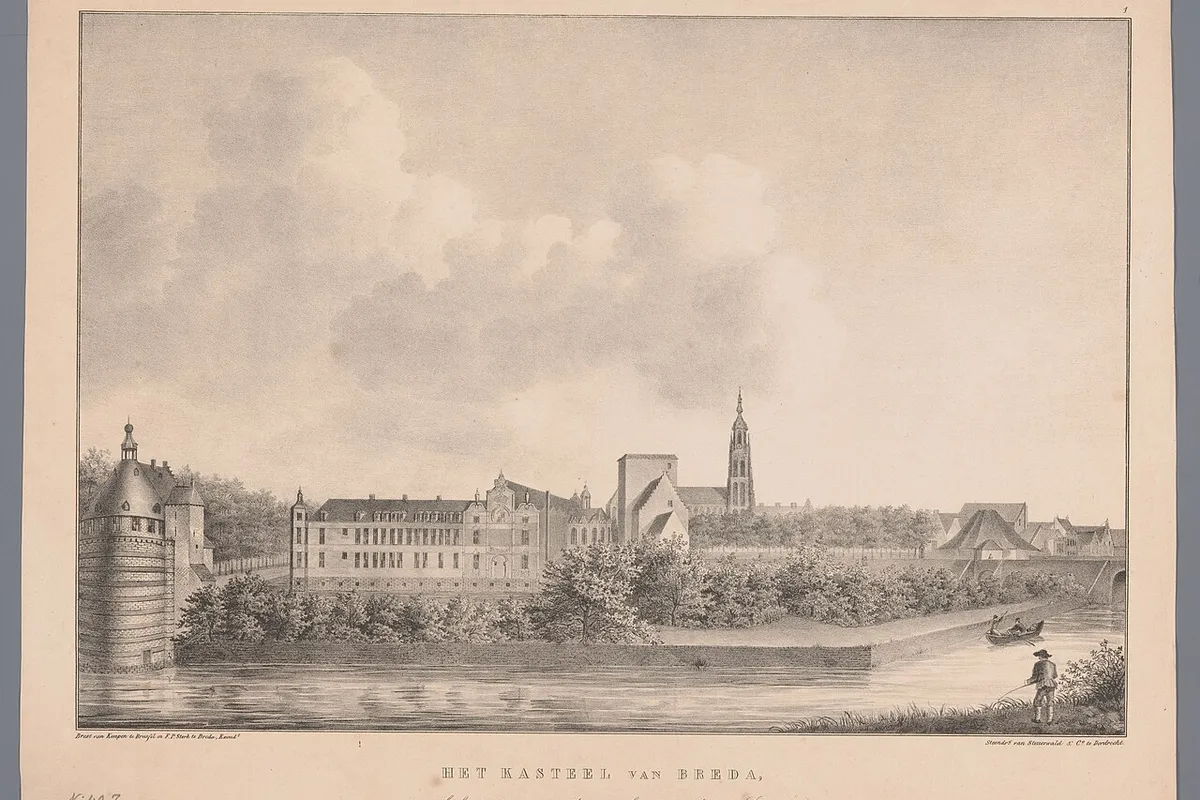 Photo: Breda, the Netherlands. Source: Wikimedia Commons.
Breda sits in the province of North Brabant, roughly halfway between Rotterdam and Eindhoven, about 10 kilometres north of the Belgian border. It has a population of around 185,000, which makes it one of the larger cities in the Netherlands outside the Randstad. Large enough to feel like a real city. Small enough that you start recognising faces after a few months.
The city has a long military history — the Spanjaardsgat, the historic watergate, stands as a reminder of the Spanish siege in the early 17th century — and a castle that still functions as the Royal Military Academy. But what defines Breda day to day is less its history and more its personality. This is Brabant. People are friendly, unhurried, and take their leisure seriously. Good coffee, long lunches, evenings that drift pleasantly into late. There is a warmth here that you feel almost immediately, especially if you are arriving from somewhere with a cooler social climate.
Breda has also been quietly investing in itself. The Spoorzone district — the former railway yard just south of the station — has been turned into a creative and cultural hub. The food scene has improved dramatically over the past five years. There are international schools, a growing design and tech scene, and a logistics sector that employs a lot of people from across Europe.
For a fuller picture of what moving to the Netherlands involves at the national level, the complete guide to moving to the Netherlands in 2026 is worth reading before you get into the Breda specifics.
Why Move to Breda as an Expat?
There are several practical reasons Breda works well for people arriving from abroad, and they go beyond the obvious charms of the city.
Transport. Breda’s railway station is on the main Amsterdam–Antwerp–Brussels axis. Direct trains run to Rotterdam in 25 minutes, Amsterdam in around 70 minutes, and Eindhoven in 45. Antwerp is 40 minutes and Brussels under 90. If you work in multiple cities or travel frequently for business, this is a serious advantage. The A16 and A27 motorways cross near Breda, and Amsterdam Schiphol is reachable in under an hour by train or car.
Cost. Rents and living costs in Breda are noticeably lower than in the Randstad. You get more space, more value for money when you go out, and a city that does not drain your savings just by existing. More on the numbers below.
International employers. Breda has a substantial logistics and distribution sector — its location near the Belgian border and multiple motorway junctions makes it a natural warehouse and distribution hub. Companies like Amazon, Bol.com, and numerous logistics firms operate here. There is also a growing design, games, and digital sector, partly driven by the NHTV (now Breda University of Applied Sciences), which has strong international connections.
Scale and quality of life. My clients who move from large cities often say the same thing: Breda feels human. You can walk or cycle most places, the city centre is genuinely attractive, and there is enough going on culturally and socially that you will not get bored. At the same time, it is not overwhelming.
Cost of Living in Breda
Getting the budget right before you move is something I always stress to clients. Use the housing budget checker to run your own numbers, and read the cost of living guide for the Netherlands in 2026 for the broader national picture. Here is what the Breda-specific situation looks like in 2026:
Rent (monthly estimates):
- Studio / one-bedroom apartment: €850–€1,200
- Two-bedroom apartment: €1,200–€1,700
- Three-bedroom family home: €1,600–€2,200
- Suburban areas (Princenhage, Teteringen): typically €150–€300 cheaper than central equivalents
For comparison, a two-bedroom in central Amsterdam runs €2,200–€2,800. In Rotterdam, €1,600–€2,100. Breda sits comfortably below both, and noticeably below Utrecht too.
Groceries: A weekly shop for two at Albert Heijn costs roughly €95–€135. Lidl and Aldi are cheaper. There is an Albert Heijn XL near the station and several Jumbo stores spread around the city.
Dining out: A café lunch runs €10–€16. A meal at a decent restaurant in the Ginnekenstraat area or near the market will be €28–€50 per person with drinks. Breda has a good mix of price points.
Transport: If you cycle everywhere — which most residents do — your ongoing transport costs are minimal. For train travel, a regular top-up on your OV-chipkaart for commuting to Rotterdam or other cities might run €80–€130 per month depending on frequency.
Utilities: Budget around €140–€210 per month for gas, electricity, and water in a two-bedroom flat. This varies with the season and the energy efficiency of the property.
Dutch health insurance: Compulsory for all residents. The base premium in 2026 is around €135–€160 per month, plus the annual deductible (eigen risico) of €385. Read the Dutch health insurance guide for expats to understand how it works before you arrive.
Neighbourhoods in Breda
Breda’s neighbourhoods are reasonably distinct in character, and where you live will shape your daily experience considerably. Here are the areas I recommend expats look at first.
Centrum
The city centre is the obvious starting point. The Grote Markt — Breda’s main square — is one of the liveliest in Brabant, ringed by café terraces and presided over by the Grote Kerk, a Gothic church whose tower is visible from much of the city. The streets around the market are pedestrianised and packed with independent shops, restaurants, and bars.
Living in Centrum means you are walking distance from almost everything. The downside is that it is also the noisiest area on weekends, and parking is either expensive or impossible if you have a car. Apartments here tend to be on the smaller side and rents are at the top end for Breda. That said, for singles or couples who want to be in the middle of everything, it works very well.
Belcrum
Belcrum is the neighbourhood I have been watching most closely over the past few years. It sits just north of the city centre, between the old harbour and the ring road, and it has changed significantly. What was a fairly anonymous post-industrial area is now one of Breda’s most interesting districts.
The Belcrumhaven — the old harbour — has been converted into a creative and social hub with restaurants, bars, food markets, and event spaces. The neighbourhood attracts younger residents, creatives, and people who want something with a bit of edge without being too far from the centre. Rents are slightly lower than in Centrum, and the housing stock includes both converted industrial spaces and newer apartments.
Chassé Park
Chassé Park is a newer residential development built on the site of a former military barracks. It has a planned, orderly feel — wide streets, green spaces, modern architecture — and attracts a lot of young families and international residents. The proximity to Breda University of Applied Sciences and several international employers makes it popular with expats.
Housing here tends to be newer and better insulated than in the older parts of the city, which matters for energy bills. The area is quieter than Centrum and Belcrum, which suits people who want to be in the city without being in the thick of it. A decent park, good cycling routes, and an easy tram connection to the station make it a practical choice.
Ginneken
Ginneken is the neighbourhood that surprises a lot of people. It sits to the south of the city centre, technically its own village before it was absorbed by Breda, and it has kept a distinct identity. The main street, Ginnekenstraat, is lined with independent shops, good restaurants, and cafés that have none of the tourist-crowd feel of the Grote Markt.
The surrounding streets are quiet, leafy, and residential. A lot of Breda’s more established expat families end up here. The housing stock is a mix of older Dutch townhouses and larger detached properties, with gardens — which is unusual so close to a city centre. Rents are on the higher end, but you get more space and a lot of character. The Liesbos forest is accessible directly from Ginneken on foot or by bike.
Princenhage
Princenhage is another former village that has been absorbed into Breda over the decades. It sits to the west of the city, and it has a genuinely village-like centre — a small market square, an old church, a handful of local shops. It is quieter and more suburban than the other areas on this list, and rents are lower.
It tends to suit families more than singles, and those who prefer calm over convenience. Cycling to the city centre takes around 20 minutes, which is perfectly manageable by Dutch standards. The area borders open countryside and some pleasant cycling routes that head west into the Brabant polder countryside.
The Housing Market in Breda
Breda’s rental market is competitive, but not at the same level of intensity as Amsterdam or Utrecht. You will need to move reasonably quickly when you find something good, but you are unlikely to face the forty-person queue situation that is common in the Randstad.
For practical advice on searching for properties, the guide to finding housing in the Netherlands as an expat covers the full process. For platform-specific advice, the comparison of Funda and Pararius is useful — both are active in Breda.
A few things worth knowing specifically about Breda:
Furnished versus unfurnished. The Dutch rental market tends towards unfurnished (“kaal” or “gestoffeerd”), which means you may need to provide your own flooring, curtains, and kitchen. Furnished apartments aimed at international tenants exist and are more common in Centrum and Chassé Park, but they command a premium.
Income requirements. Most landlords or agencies will ask to see payslips for the last three months and will typically require a gross monthly income of three times the rent. If you are self-employed or newly arrived, this can be a sticking point. Having a Dutch bank account helps. I recommend getting your bank account sorted early — even before you arrive if possible.
Social housing. The waiting lists for social housing (sociale huur) in Breda run to several years. This is not a realistic option for most expats, so budget for the private rental market.
Buy versus rent. If you are planning to stay for more than three or four years, buying can make financial sense in Breda. Purchase prices are lower than in Amsterdam or Utrecht, and the market has been more stable. An expat mortgage is possible but comes with conditions — see the expat mortgage guide for more detail.
Registration and Getting Your BSN
This is the administrative step that everything else depends on. Without a BSN — your citizen service number — you cannot open a Dutch bank account, access healthcare, start a job, or sign up for insurance.
The process in Breda:
- Book an appointment at the Gemeente Breda (gemeente.breda.nl). Appointments can fill up a few weeks out, so do this as soon as you have a confirmed rental address.
- Bring your valid passport (and residence permit if you are a non-EU citizen), your rental contract or a written declaration from your landlord, and any other supporting documents the municipality requests.
- Register your address. Your BSN will either be issued at the appointment or arrive by post within a few days.
The BSN registration guide covers the full process in detail, including what to do if you are staying temporarily or with family. I also recommend using the BSN planner tool to prepare everything you need before your appointment — it saves time and avoids the frustrating experience of showing up with the wrong documents.
Non-EU citizens will need to arrange their visa or residence permit before registering. This is handled through the IND (Immigratie en Naturalisatiedienst), not the municipality.
Transport In and Around Breda
Breda works extremely well from a transport perspective, and this is one of the things that genuinely distinguishes it from some other mid-sized Dutch cities.
Train. Breda station is a major intercity hub. Direct trains run frequently to Rotterdam Centraal (25 min), Eindhoven (45 min), Amsterdam Centraal (70 min), Utrecht (55 min), and international services to Antwerp and Brussels. The NS app makes planning easy. Buy a personal OV-chipkaart rather than paper tickets — it is cheaper and more convenient. Full guidance is in the OV-chipkaart guide for expats.
Bus. Arriva operates the urban bus network in Breda. It is decent but, like most Dutch cities, cycling is almost always faster for local journeys. The bus is most useful for reaching suburban areas and villages outside the cycling radius.
Cycling. This is, as always in the Netherlands, the real answer. Breda has an excellent cycling infrastructure. The city centre is almost entirely accessible by dedicated cycle paths, and most residential neighbourhoods are well connected. A good-quality second-hand bike costs €150–€350 and will serve you well. The cycling guide for expats is worth reading if you have not cycled in traffic before — Dutch cycling culture has its own unwritten rules.
Car. If you drive, Breda is well positioned. The A16 connects south to Antwerp, and the A27 runs north to Utrecht and beyond. Parking in the city centre is expensive (€2.50–€3.50 per hour), so most residents with cars use park-and-ride facilities or park in residential zones. For daily life within the city, a car is largely unnecessary.
Work and the Economy
Breda is not a single-industry city, which is both a strength and a limitation. It does not have the concentrated tech cluster that Eindhoven has around ASML and Philips, but it has a more varied economic base.
Logistics and distribution. This is one of Breda’s biggest sectors. The combination of motorway access, rail links, and proximity to Antwerp and Rotterdam ports makes it a natural location for warehousing, distribution, and supply chain operations. Companies including Amazon, DHL, and numerous others have major operations in and around Breda.
Creative and digital. Breda University of Applied Sciences (BUAS, formerly NHTV) has a strong focus on games design, media, and hospitality, and it draws international students and faculty. This has helped build a small but active creative and digital sector in the city. The Spoorzone district is the centre of this community.
Healthcare. Amphia Hospital is one of the larger regional hospitals in North Brabant and employs a significant number of people.
Cross-border. Breda’s location near the Belgian border means some residents work in Antwerp or elsewhere in Belgium, taking advantage of relatively lower housing costs on the Dutch side.
English is sufficient for many roles in the logistics and tech sectors, but Dutch remains important for client-facing work and career progression. If you are serious about building a career in Breda long-term, investing in Dutch language learning pays off.
Social Life and Community
One of my favourite things about advising people to move to Breda is that the social side is genuinely good. Brabant has a reputation for being the most sociable part of the Netherlands, and Breda lives up to it.
The expat community. There is not a single large expat hub the way there might be in The Hague or Amsterdam, but there are active communities. BUAS brings in students and academics from all over the world. The logistics sector brings in people from across Europe. InterNations has a Breda chapter. Facebook groups for Breda expats are active.
Nightlife and going out. The Grote Markt and surrounding streets have a lively café and bar scene. Breda is not a nightlife city in the way Rotterdam or Amsterdam is, but there is enough going on that you will not run out of options. The Beyerd brewery is a Breda institution. Café de Karpershoek near the market is worth knowing.
Culture. The Chassé Theater is the main venue for theatre, dance, and larger performances. The Stedelijk Museum Breda has good contemporary exhibitions. The Begijnhof — a historic courtyard of almshouses — is one of the most peaceful spots in the city and worth visiting on a quiet afternoon.
Parks and green space. Valkenberg Park, right next to the castle, is where a lot of Breda social life happens on warm days. The Mastbos, a large forest south of the city, is excellent for long walks and cycling. The Liesbos, reachable from Ginneken, is quieter and particularly good for early morning walks.
Carnaval. Like Den Bosch and Tilburg, Breda takes carnaval seriously. The city temporarily becomes Kielegat during the three-day celebration before Ash Wednesday. If you are here for it, it is worth throwing yourself in. It is one of the most genuinely local experiences you will have.
Comparing Breda to Other Dutch Cities
Breda often comes up alongside Den Bosch when expats are weighing up Brabant options. The two cities are about 35 minutes apart by train, have similar cultural characters, and are often discussed together. My rough take:
- Den Bosch has slightly more cultural weight and a more dramatic medieval centre.
- Breda has better international transport links, particularly for Rotterdam and Belgium, and a slightly more varied economy.
- Both are significantly more affordable than the Randstad and both have the Brabant warmth that makes settling in much easier.
If you are also considering cities in the Randstad, the relevant comparison guides for Rotterdam, Utrecht, and The Hague are on the site.
Pros and Cons of Living in Breda
I always give clients both sides. Here is the honest version.
Pros:
- Lower rents and living costs compared to the Randstad
- Excellent train connections to Rotterdam, Amsterdam, and Belgium
- Warm, sociable Brabant culture — easier to make friends than in many Dutch cities
- Attractive city centre with genuine character
- Good mix of urban convenience and accessible countryside
- Growing international community
- Less competitive housing market than Amsterdam, Utrecht, or The Hague
- Cycling infrastructure is excellent
Cons:
- Fewer large international employers than Eindhoven or Amsterdam
- Not as many English-language cultural events as The Hague
- Public transport within the city (buses) is adequate but not impressive
- Dutch remains important for professional advancement in many sectors
- The city centre can get noisy on Friday and Saturday evenings
- Less established expat infrastructure compared to The Hague or Amsterdam
Conclusion
Breda is the kind of city that rewards people who give it a proper chance. It does not sell itself loudly. It does not have the international profile of Amsterdam or the startup buzz of Eindhoven. What it has is a very high quality of daily life, a transport network that punches above its weight, and a cultural character that makes it genuinely pleasant to live in.
For expats who want real Dutch life — cycling everywhere, good food, warm communities, manageable costs — without the intensity or the price tag of the Randstad, Breda is one of the best options in the country. I have watched clients move there cautiously and stay enthusiastically. That pattern tells you something.
If you are in the planning stages, start with the housing budget checker to get your numbers right, book your Gemeente appointment as soon as you have an address, and get your BSN process underway early. The rest follows from there.
Good luck with the move — I hope Breda turns out to be as good a decision for you as it has been for the people I have helped settle there.