I moved to the Netherlands almost a decade ago, and I have spent a lot of time helping other expats figure out where to put down roots. Most of them start the conversation the same way: Amsterdam, Amsterdam, Amsterdam. And I understand it. Amsterdam is the obvious answer. But it is not always the right one.
Den Bosch — officially ’s-Hertogenbosch, though nobody outside of official paperwork calls it that — is the city I find myself recommending more and more. It has genuine character. It has history you can actually touch. It has food that will make you slightly obsessed. And it does not cost you everything you earn just to rent a flat.
This guide is everything I wish someone had handed me before I started advising clients on Den Bosch. Whether you are arriving from the UK, the US, Germany, or somewhere else entirely, I want to give you an honest picture of what life here actually looks like.
Why Den Bosch?
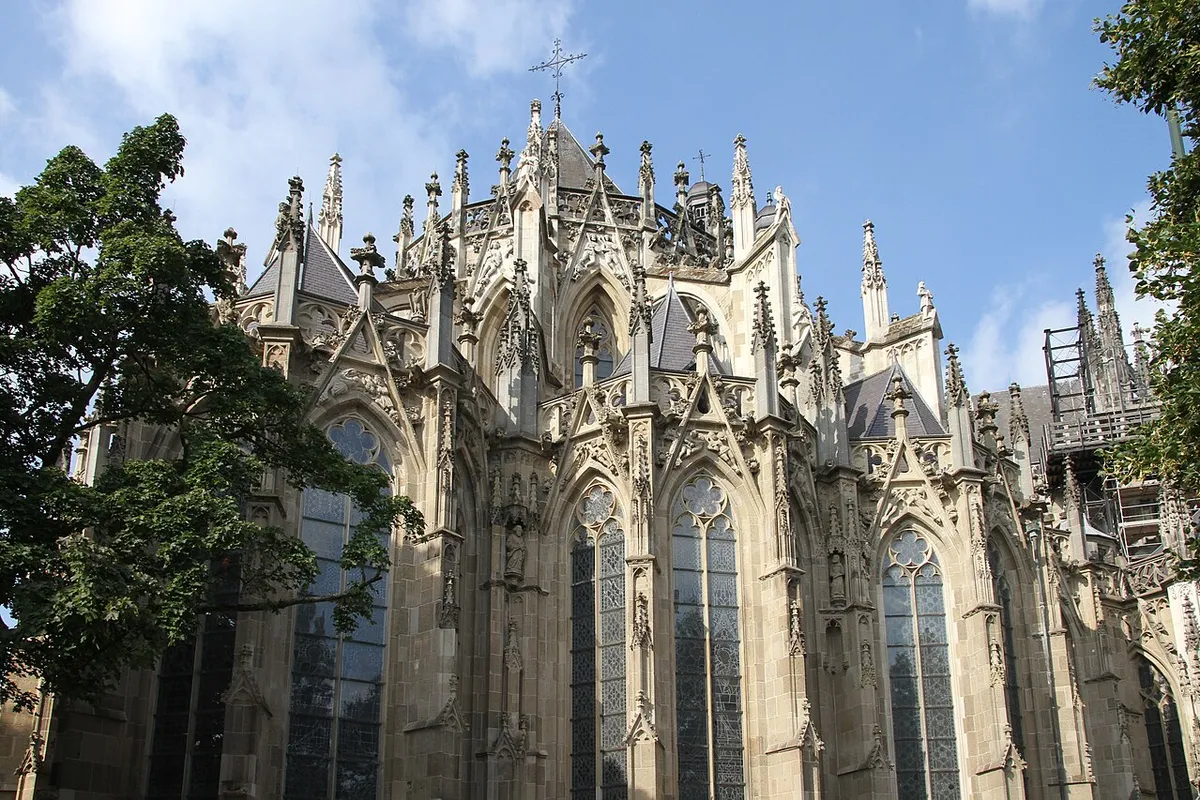 Photo: Den Bosch, the Netherlands. Source: Wikimedia Commons.
Den Bosch is the capital of North Brabant, the Dutch province that sits just above Belgium and runs west to east from Breda to Eindhoven. It has a population of around 160,000, which makes it a proper city — not a village, not a sprawling metropolis — with all the infrastructure that comes with that.
What sets Den Bosch apart from most Dutch cities is its personality. The Brabanders have a reputation in the Netherlands for being warmer, more relaxed, and more sociable than people in the north. They call it the Burgundian lifestyle: good food, good company, good beer. In my experience, this is not just a regional cliché. You notice it in how people behave in shops, in cafes, at work. There is less of the blunt efficiency that can feel a bit cold when you first arrive further north.
The city is also historically remarkable. Hieronymus Bosch — the 15th-century painter of surreal, nightmarish, gorgeous work — was born here. The Noordbrabants Museum has a permanent Bosch exhibition that is worth the trip on its own. The medieval cathedral, Sint-Janskathedraal, is one of the finest Gothic churches in the Netherlands. And then there is carnaval, which Den Bosch takes very seriously. Three days in February, the city transforms completely. If you are here for it, embrace it. It is genuinely fun.
Why Move to Den Bosch as an Expat?
There are several practical reasons Den Bosch works well for expats, beyond the obvious charms.
Location. Den Bosch sits at the junction of the A2 and A59 motorways, and the train station is a major hub on the Amsterdam–Eindhoven–Maastricht axis. You can reach Amsterdam in under an hour, Eindhoven in twenty minutes, and Utrecht in thirty-five. If your job is in the Randstad but you do not want to live there, Den Bosch is one of the few places where the commute is actually manageable.
Cost of living. This is the big one. Rents in Den Bosch are meaningfully lower than in Amsterdam, Utrecht, or The Hague. You get more space for your money, and the general cost of going out, eating well, and enjoying yourself is lower too.
English-friendly environment. The international business community in Brabant, anchored by companies like ASML and Philips in nearby Eindhoven, has driven English proficiency up significantly in the region. You will have no difficulty getting by in English, though as I said above, some Dutch will always help.
Scale. Den Bosch is big enough to have everything you need — good restaurants, cultural venues, international supermarkets, a hospital — but small enough that you do not feel anonymous. I have clients who moved from London or Berlin and found the city genuinely refreshing after years of feeling lost in the crowd.
Cost of Living in Den Bosch
Before you commit to a move, it is worth running the numbers properly. I always recommend using a tool like the housing budget checker to get a realistic picture of what you can afford before you start viewing properties.
The full picture for the Netherlands is in the cost of living guide for 2026, but here is a Den Bosch-specific snapshot:
Rent (2026 estimates):
- Studio / one-bedroom: €950–€1,250/month
- Two-bedroom apartment: €1,300–€1,800/month
- Three-bedroom family home: €1,700–€2,400/month
- Rosmalen or suburban areas: typically €200–€350 cheaper
For comparison, a comparable two-bedroom in Amsterdam would run €2,200–€2,800. In Utrecht, €1,800–€2,300. Den Bosch is a significant step down in housing costs.
Groceries: Dutch supermarkets are not cheap by British standards, but they are not outrageous either. A weekly shop for two at Albert Heijn runs roughly €100–€140. Aldi and Lidl are cheaper. A Jumbo near the centre is a good middle ground.
Dining out: A sit-down lunch at a café will be €12–€18. Evening meals at a decent restaurant run €30–€55 per person with drinks. Den Bosch has a good range from budget to very nice.
Transport: If you cycle — and you will — your costs are minimal. A monthly OV-chipkaart top-up for occasional train travel might run €60–€100 depending on how often you travel to other cities.
Utilities: Budget €150–€220/month for gas, electricity, and water in a two-bedroom flat.
Best Neighbourhoods in Den Bosch
Centrum
The historic centre is beautiful. If you can afford it and you want to live in the middle of things, this is the obvious choice. Tall narrow houses, canal-side streets, the Markt square nearby. Rents are higher here, and parking is difficult, but you can walk or cycle everywhere. Great for single professionals or couples without children.
Vughterweg and surroundings
Just south of the centre, this area has become popular with young professionals and expats. It is a bit more residential than the Centrum but still within easy cycling distance of everything. A good mix of apartment blocks and older townhouses.
De Pettelaar
A newer, quieter residential area east of the centre. Popular with families. Good schools nearby, green spaces, and still a short cycle to the city. Rents are lower than the Centrum but the area is well-kept and comfortable.
Rosmalen
Technically a separate municipality, though now fully absorbed into the Den Bosch urban area. Rosmalen is suburban in feel — larger homes, more parking, quieter streets. Very popular with families with children, and rents are noticeably more affordable. The downside is that you will use the car or train more than if you live centrally.
Zuid (South)
A mixed area south of the ring road. Cheaper than the Centrum but close to it. Getting more popular as central rents have risen. Worth looking at if you want value and do not mind a slightly less polished streetscape.
The Housing Market
Den Bosch has the same pressures as the rest of the Netherlands — demand outstrips supply, especially at the affordable end. That said, it is considerably less frantic than Amsterdam or Utrecht.
For rentals, I recommend starting on Funda and Pararius — both have good Den Bosch listings, and they work differently, so use both. Funda tends to have more estate agent listings; Pararius focuses on private rental.
A few practical notes:
- Many landlords require proof of employment and ask for gross monthly income of 3x the rent. Have your employment contract or income statement ready.
- Short-term and furnished lets are more expensive but easier to secure quickly.
- The free-market rental sector has faced changes under recent Dutch housing legislation. Be aware that some listings that were previously in the free sector may now fall under the regulated sector. Your real estate agent should explain this when you view.
For a full breakdown of the Dutch rental market from an expat perspective, the finding housing in the Netherlands guide covers it in detail.
Registration and BSN
Once you have your housing sorted, registration is your first official task. This is not optional — you need to register with the Gemeente ’s-Hertogenbosch within five days of moving in if you plan to stay for more than four months.
The Gemeente’s main office is at Stadhuisplein 1. Book an appointment online — walk-ins are generally not accepted.
What you need:
- Valid passport or EU identity card
- Your rental contract or a statement from your landlord confirming your address
- For non-EU citizens: a valid residence permit or MVV
After registration, you will receive your BSN (Burgerservicenummer) — the Dutch equivalent of a national insurance number. You need this for everything: opening a bank account, registering with a GP, starting a job, claiming benefits. The BSN registration guide walks through the process step by step, including what to do if you arrive without a permanent address.
The BSN planner tool can also help you map out your first weeks and make sure you are doing things in the right order.
For a broader overview of the administrative process of moving to the Netherlands, the complete guide to moving to the Netherlands is a good companion read.
Getting Around Den Bosch
By train
Den Bosch’s main station, ’s-Hertogenbosch Centraal, is well-connected. Direct Intercity trains to Amsterdam take around one hour. Eindhoven is 20–25 minutes. Utrecht is about 35 minutes. Rotterdam and The Hague are reachable with one change.
For all public transport in the Netherlands, you use the OV-chipkaart system. My OV-chipkaart guide for expats covers how to get one, how to top it up, and how to avoid the common mistakes.
By bike
Den Bosch is a cycling city. The infrastructure is very good, and the city is flat — which is exactly what you want. Most expats adapt quickly. Within the city and its suburbs, cycling is faster than driving for most journeys.
If you are new to cycling Dutch-style, have a read of the cycling in the Netherlands guide for expats — it covers the rules, the etiquette, and how to buy a decent second-hand bike without getting ripped off.
By car
The A2 motorway runs through Den Bosch, connecting it north to Utrecht and Amsterdam, and south to Eindhoven and Belgium. If your work takes you around Brabant — Tilburg, Breda, Eindhoven — having a car makes life easier. Within the city itself, parking is expensive and the one-way systems can be maddening. Most residents who live centrally do not bother with a car day to day.
Work and Economy
Den Bosch is a working city with a diverse economy. Several sectors are particularly strong:
Logistics. The location at the junction of major road and rail routes makes Den Bosch a logistics hub. Several large distribution centres and logistics companies are based in the area. If you work in supply chain, procurement, or operations, there is meaningful employment here.
Healthcare and pharma. The Jeroen Bosch Ziekenhuis is one of the larger hospitals in the region, and there are several pharma and medtech companies in and around the city.
Public sector and services. As the provincial capital, Den Bosch has a significant public sector presence — the province of North Brabant is headquartered here, as are various government agencies.
Broader Brabant tech corridor. Eindhoven is only 20 minutes by train, and the ASML-driven tech ecosystem there is growing fast. Many people base themselves in Den Bosch and commute to Eindhoven for work. It is an increasingly popular combination.
Salaries in Den Bosch are broadly comparable to national averages, though typically below Amsterdam or Eindhoven for tech roles. The lower cost of living often makes the net financial position comparable or better.
Social Life, Culture, and Food
I should talk about the bossche bol, because it would be wrong not to. It is a large choux pastry ball filled with whipped cream and covered in dark chocolate. It is the city’s signature food, sold in bakeries across Den Bosch, and if you have not tried one within your first week of arriving, you are doing something wrong. Jan de Groot on the Markt is the most famous producer. There will be a queue. Join it.
Beyond pastry, Den Bosch has a genuinely good food scene. The streets around the Markt and along the Hinthamerstraat are lined with cafés, restaurants, and terraces. There is strong Italian, French, and Indonesian food, and the classic Dutch brown café (bruine kroeg) culture is alive and well in Brabant. The locals know how to sit over a beer for three hours and consider it time well spent.
Culture. The Noordbrabants Museum is excellent, particularly for the Bosch collection. The city also has the Stedelijk Museum ’s-Hertogenbosch for contemporary art, a well-regarded theatre (Theater aan de Parade), and a regular programme of outdoor markets and events. The Wednesday and Saturday markets on the Markt square are particularly good.
Carnaval. This deserves its own paragraph. Den Bosch takes carnaval seriously — more seriously than most Dutch cities. The city becomes “Oeteldonk” for three days in February, complete with its own coat of arms, traditional costumes, and its own carnaval dialect words. You do not need to understand it all to enjoy it. Just show up, buy a costume, and go with it.
Expat community. Den Bosch’s expat community is smaller than Amsterdam’s or Eindhoven’s, but it is growing. InterNations has a Den Bosch group. Facebook groups for English-speaking residents are active. And many expats find the smaller community actually makes it easier to form genuine connections rather than floating through a sea of strangers.
Practical Essentials
Health insurance. Health insurance is compulsory in the Netherlands from your first day of residency. The Dutch health insurance guide for expats explains the system, how to compare providers, and what the eigen risico (deductible) means for you.
Bank account. Opening a Dutch bank account is simple once you have your BSN. The best bank accounts for expats in the Netherlands compares your options, including Bunq, ING, Rabobank, and Revolut as a stopgap while you wait.
Schools. Den Bosch has several good international and bilingual education options, particularly at secondary level. The Stedelijk Gymnasium and several VMBO/HAVO/VWO schools with bilingual streams are options for expat families. For younger children, there are various international primary school options in the area.
Comparing Den Bosch to Eindhoven
Many expats in Brabant weigh up Den Bosch against Eindhoven. They are different cities with different personalities. Eindhoven is younger, more tech-driven, and has a larger expat community (particularly from the ASML ecosystem). Den Bosch is older, more culturally rich, and has a stronger sense of traditional Dutch life mixed with Burgundian warmth.
If you are a tech professional joining a company near the High Tech Campus, Eindhoven is the obvious choice — though many people do make the 20-minute commute from Den Bosch. If you are a remote worker, a freelancer, or someone working across multiple cities, Den Bosch often wins on quality of life. The moving to Eindhoven guide is worth reading for a direct comparison if you are undecided.
Pros and Cons of Living in Den Bosch
Pros:
- Affordable rents compared to the Randstad
- Excellent train connections to Amsterdam, Utrecht, and Eindhoven
- Strong cultural identity and community feel
- Beautiful historic centre
- Genuinely good food and café culture
- Less competitive housing market than Amsterdam or Utrecht
- Warm, sociable local culture
Cons:
- Smaller English-speaking expat community than Amsterdam or Eindhoven
- Fewer large international employers directly in the city
- Public transport within the city is less extensive than in a Randstad city
- Carnaval is brilliant but it is three very loud days — not ideal if you value peace in February
- Housing still tight at the affordable end, though less so than the west
Final Thoughts
Den Bosch is one of the most genuinely enjoyable cities I have seen expats settle into over the years. It does not have the international profile of Amsterdam, and it does not have the tech-sector buzz of Eindhoven. But it has something both of those cities sometimes lack: a sense of place, and a population that knows how to live well in it.
If you are open to living somewhere that is not the obvious choice, somewhere with real history, real character, and a level of affordability that lets you build a life rather than just cover your rent — Den Bosch is worth taking seriously.
Do your research, use the tools and guides I have linked throughout this article, and if you have questions about the Den Bosch housing market or the practicalities of settling in, feel free to reach out. I have been doing this long enough to have opinions on most of it.
Good luck with the move.
— Sarah
Sarah van den Berg is an expat coach and relocation specialist. Half Dutch, half British, living in the Netherlands for over 10 years.