The first time I visited Haarlem, I came on a Saturday afternoon from Amsterdam on a whim. I had been living in the Netherlands for about six months and was starting to feel like Amsterdam was slightly suffocating — the tourists, the noise, the rent. A colleague mentioned Haarlem in passing and I thought: it is fifteen minutes away, why not have a look?
I stepped off the train, walked out of what is genuinely one of the most beautiful train stations in the country, and within ten minutes was sitting in a small café on the Grote Markt watching people cycle past the Grote Kerk. I had a coffee and a piece of appelgebak and thought: people actually live here. Then I found out the rent was considerably lower than Amsterdam and I thought: I want to live here.
Three years on from that Saturday afternoon, I know Haarlem far more intimately than that first impression suggested. It has its complications and its limitations. But for a certain kind of expat — someone who wants genuine quality of life, space, proximity to Amsterdam without paying Amsterdam prices — it is quietly one of the best places in the Netherlands to make a home.
Why Haarlem? The Case for Choosing It Over Amsterdam
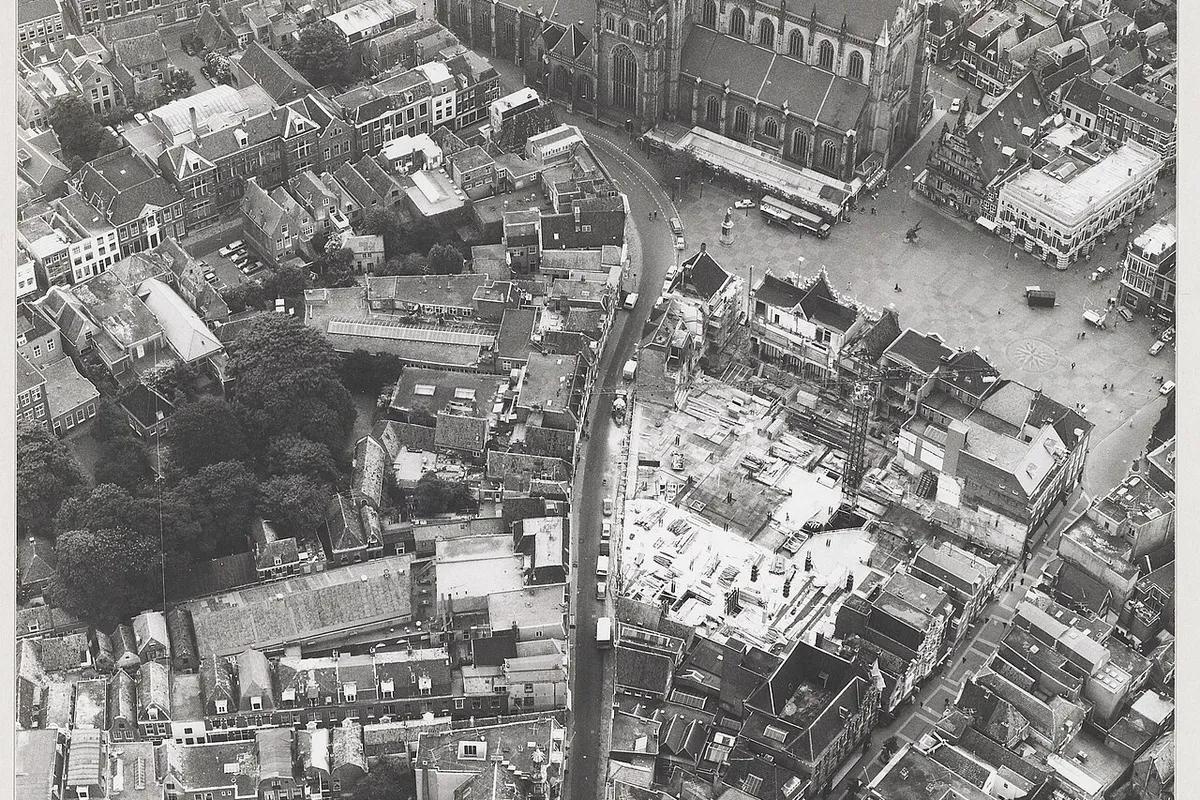 Photo: Haarlem, the Netherlands. Source: Wikimedia Commons.
Before getting into the practical details, it is worth explaining why Haarlem keeps appearing on expats’ lists when they are making their Dutch city decision.
Proximity to Amsterdam. Fifteen minutes by direct train. That is not a compromise — that is a genuinely good commute. You have access to Amsterdam’s job market, cultural scene, airport connections, and social opportunities, while living somewhere quieter and more manageable. Many expats who originally dismissed Haarlem as “too far” have told me they cannot imagine going back after making the move.
The historic centre. Haarlem’s Centrum is extraordinarily well preserved. Seventeenth-century canal houses, the towering Grote Kerk dominating the skyline, the Grote Markt with its market stalls twice a week, the Franz Hals Museum with one of the finest collections of Dutch Golden Age painting outside Amsterdam’s Rijksmuseum. Living here does not feel like living in a pretty postcard — it is a functioning city with restaurants, supermarkets, and a Saturday market where people actually do their shopping.
Beach access. Zandvoort is eight kilometres from Haarlem, and in summer the train runs directly from Haarlem Centraal in twelve minutes. On a warm August afternoon that matters more than most people expect. For expats from coastal countries especially, having the North Sea within cycling distance makes a genuine difference to wellbeing.
The flower fields. Between late March and early May, the bulb fields around Haarlem and running towards Keukenhof are in bloom. This is not just pretty to look at — it is one of those things that reminds you that the Netherlands has a genuine, distinctive character all its own. Cycling through those fields on an April morning never completely stops being extraordinary, no matter how many years you have done it.
Scale. Haarlem has a population of around 162,000. It is a real city — it has a hospital, a university of applied sciences (Hogeschool Inholland), sports facilities, a cinema, theatres — but you can cycle across it in twenty minutes. You learn the layout quickly. You start recognising people. That sense of being part of a place, rather than anonymous in it, is something Amsterdam rarely offers.
Haarlem Neighbourhoods: Where to Live
Centrum — Historic and Central
The Centrum is where most people picture when they think of Haarlem: the Grote Markt, the Bavo church, the narrow shopping streets, the canals. Living in the Centrum puts you within walking distance of everything — restaurants, markets, supermarkets, the train station, the Frans Hals Museum.
- Rent: EUR 1,200-1,700 for a 1-bedroom
- Vibe: Historic, busy during the day, quieter evenings
- Best for: Single professionals, couples without children, those who want walkable urban living
- Pros: Beautiful surroundings, everything on foot, strong sense of place
- Cons: Apartments are often old (high ceilings but sometimes poor insulation), limited parking, tourist presence in summer
Vijfhoek — Quiet and Characterful
The Vijfhoek (Five Corners) neighbourhood sits just west of the Centrum and is arguably the most desirable residential area in all of Haarlem. It has the same Golden Age architecture but is primarily residential rather than commercial — quieter streets, fewer tourists, a strong neighbourhood identity. It is where many of Haarlem’s established families and longer-term residents live.
- Rent: EUR 1,300-1,900 for a 1-bedroom
- Vibe: Calm, characterful, residential
- Best for: Couples, anyone who values quiet over convenience
- Pros: Beautiful streets, very safe, strong community feel
- Cons: Premium prices for the area, limited stock available
Haarlem-Noord — Emerging and Affordable
Noord is changing fast. It sits north of the train tracks and has historically been considered the less desirable side of Haarlem. That perception is shifting. New developments, a growing café and restaurant scene around the Cronjé area, and significantly lower rents than the Centrum or Vijfhoek are drawing younger residents and expats who want more space for their money.
- Rent: EUR 950-1,350 for a 1-bedroom
- Vibe: Up-and-coming, spacious, local
- Best for: Younger expats, those on tighter budgets, people who want larger apartments
- Pros: Lower rents, more modern housing stock in some areas, quieter
- Cons: Fewer cafés and restaurants in immediate area, less picturesque, some streets still feel transitional
Schalkwijk — Suburban and Family-Oriented
Schalkwijk is Haarlem’s largest residential district and sits to the south-east of the city. It is a post-war neighbourhood — more 1960s and 70s apartment blocks than canal houses — but it has good facilities, several good primary schools, sports clubs, and significantly lower rents than the Centrum. It is popular with families and with those who have moved to Haarlem from Amsterdam specifically for more space.
- Rent: EUR 900-1,300 for a 1-bedroom; EUR 1,100-1,600 for a 2-bedroom
- Vibe: Suburban, practical, family-friendly
- Best for: Families with children, those prioritising space over aesthetics
- Pros: Lower costs, good schools, sports facilities, room for children to play outdoors
- Cons: Further from the Centrum, less character, dependent on cycling or bus rather than walking everywhere
Neighbourhood Comparison Table
| Neighbourhood | 1-bed Rent | 2-bed Rent | Best For | Character |
|---|---|---|---|---|
| Centrum | EUR 1,200-1,700 | EUR 1,600-2,200 | Singles, couples | Historic, vibrant |
| Vijfhoek | EUR 1,300-1,900 | EUR 1,700-2,400 | Couples, established professionals | Quiet, characterful |
| Haarlem-Noord | EUR 950-1,350 | EUR 1,200-1,700 | Younger expats, budget-conscious | Emerging, affordable |
| Schalkwijk | EUR 900-1,300 | EUR 1,100-1,600 | Families | Suburban, practical |
Housing Costs in Haarlem 2026
Renting
Haarlem’s rental market has tightened considerably since 2022. The city absorbed significant demand from Amsterdam as rents there climbed to unsustainable levels, and Haarlem rents have followed upward in response. That said, you are still paying meaningfully less than Amsterdam for comparable quality.
Key rental figures for 2026:
- Studio/one-bedroom, Centrum: EUR 1,100-1,700/month
- One-bedroom, outer neighbourhoods: EUR 900-1,300/month
- Two-bedroom, Centrum: EUR 1,500-2,200/month
- Two-bedroom, Schalkwijk/Noord: EUR 1,100-1,600/month
- Three-bedroom family apartment: EUR 1,700-2,500/month
- Typical deposit: 1-2 months’ rent
For housing search strategy, the same platforms that work in Amsterdam work in Haarlem: Funda.nl, Pararius.com, and HousingAnywhere.com. The Haarlem market moves slightly more slowly than Amsterdam’s, so you have a little more time to view and decide — but not much. Good apartments still go quickly.
Check our finding housing in the Netherlands guide for a full search strategy, and use our housing budget checker to work out what you can realistically afford after Dutch taxes and deductions.
Buying Property in Haarlem
Haarlem’s property prices are high but still sit below Amsterdam:
- Average price per m²: EUR 5,500-7,500 (Centrum and Vijfhoek) / EUR 4,000-5,500 (Noord, Schalkwijk)
- Typical 2-bedroom apartment, Centrum: EUR 380,000-600,000
- 2-bedroom apartment, Schalkwijk: EUR 270,000-400,000
- Canal house (as a whole, rare): EUR 600,000-1,200,000+
If you are considering buying, read our expat mortgage options guide first. Expats on temporary contracts face more hurdles than those with permanent employment, and the Haarlem market moves quickly enough that pre-approval before you start viewing is strongly advisable.
Getting Around Haarlem
By Train
The train is the defining transport link that makes Haarlem work for Amsterdam commuters. Haarlem Centraal sits on the intercity line between Amsterdam Centraal and The Hague/Rotterdam:
- Haarlem to Amsterdam Centraal: 15-17 minutes, trains every 10 minutes
- Haarlem to Schiphol Airport: 16 minutes direct
- Haarlem to Leiden: 25 minutes
- Haarlem to The Hague: approximately 45 minutes
A single journey to Amsterdam costs around EUR 4.70 with your OV-chipkaart. Read our OV-chipkaart guide for how to set one up when you arrive.
For regular commuters, a train subscription makes sense financially. The NS Dal Vrij subscription (off-peak, unlimited) costs around EUR 112/month and is worth it for those whose employer has flexible hours or remote working options.
By Bicycle
Haarlem is an excellent cycling city. The flat terrain, the good cycling infrastructure, and the relatively short distances make the bicycle the default for daily life. Within Haarlem itself, almost everything is reachable by bike in under fifteen minutes. The cycling path to Zandvoort beach takes around 25-30 minutes each way — a genuinely enjoyable ride through the dunes rather than a chore.
For those considering the Amsterdam commute by bike, the dedicated cycle route (LF Hollandroute) between Haarlem and Amsterdam is around 22 kilometres and takes 35-45 minutes in reasonable conditions. Several expats I know do this regularly in summer.
By Bus
Connexxion operates Haarlem’s urban and regional buses. Bus connections within the city are adequate but cycling tends to be faster for most journeys. Key regional routes include connections to Zandvoort, IJmuiden, and surrounding towns.
By Car
Haarlem is well connected by road. The A9 connects to the motorway network towards Amsterdam, Schiphol, Alkmaar, and beyond. Parking in the Centrum is paid and expensive (EUR 2.50-4.00/hour at surface car parks). Residential parking permits are available but with queues. If you need a car for your work or lifestyle, living in Schalkwijk or Noord makes the car situation considerably more manageable than the Centrum.
International Community and Expat Life
Haarlem does not have Amsterdam’s density of international expat infrastructure — there is no dedicated Expatcenter, no large-scale international corporate campus — but the international community is real and growing. Many Haarlem expats work in Amsterdam and choose to live here for quality of life rather than convenience of services.
The Facebook group “Expats in Haarlem” has several thousand members and is the most active community hub. InterNations has a Haarlem chapter that organises regular meetups. The proximity to Amsterdam means that Amsterdam-based expat communities and events are easily accessible.
Language is not a barrier. Haarlem residents speak English to a high standard. Restaurants, shops, and services all operate comfortably in English.
Schools in Haarlem
International Schools
Haarlem does not have a dedicated international school within the city itself, but several excellent options are within commuting range:
- International School of Amsterdam (ISA) — Amstelveen, around 30-40 minutes by public transport. IB curriculum, highly regarded.
- British School of Amsterdam — Amsterdam South, around 30-35 minutes. British curriculum, Years 1-13.
- American School of The Hague — The Hague, around 45-50 minutes. American curriculum.
The absence of an international school within Haarlem itself is a real drawback for expat families who need one. Factor in the daily commute for children when making your decision. Read our international schools in the Netherlands guide for a full overview.
Dutch State Schools
For expats planning to stay longer term, or whose children are young enough to adapt, Haarlem’s Dutch state schools are of good quality. Most primary schools have experience with non-Dutch-speaking new arrivals and have integration programmes. Several schools have bilingual tracks (tweetalig onderwijs, TTO) at secondary level.
Healthcare in Haarlem
Haarlem has good healthcare provision. The main hospital is Spaarne Gasthuis, with locations in both Haarlem-Noord and the neighbouring town of Hoofddorp. It provides full general hospital services including an emergency department. The hospital has English-speaking staff in most departments.
For primary care, you must register with a GP (huisarts) after arriving. Several practices in Haarlem are experienced with international patients. The GP is the gatekeeper to specialist care in the Dutch system — you cannot go directly to a specialist without a referral.
Dutch health insurance is mandatory. Read our Dutch health insurance guide for expats for how the system works and how to choose a policy.
Restaurants, Culture, and Things to Do
Food and Drink
Haarlem has a serious food scene for a city of its size. The area around the Botermarkt and Kleine Houtstraat has a high concentration of good independent restaurants — Indonesian, Japanese, Italian, French — as well as traditional Dutch cafés (bruine kroegen) that are ideal for a Friday afternoon. The Jopen brewery, based in a converted church, produces excellent local beer and is a social institution in the city.
The Saturday market on the Grote Markt is worth building your weekend around. Fresh produce, cheese, flowers, and the general theatre of Dutch market life.
Culture
- Frans Hals Museum: One of the finest regional museums in the Netherlands, with a remarkable collection of Dutch Golden Age portraits by Haarlem’s most famous son. Split across two locations — the Hof in the Centrum and Hal in Haarlem-Noord.
- Teylers Museum: The Netherlands’ oldest museum, founded in 1778. A beautiful building housing natural history, art, and scientific instruments.
- Grote Kerk (St Bavo): The dominant landmark on the Grote Markt. The interior is worth seeing for the architecture alone; it also houses a famous Müller organ that Mozart played as a child.
- Filmhuis Haarlem and Kinepolis: Options for cinema, from arthouse to mainstream.
Beach and Outdoor Life
Zandvoort is the main beach town for Haarlem residents. By bike it is 25-30 minutes through the dunes — a genuinely pleasant ride. By train it is 12-15 minutes. In summer, beach clubs operate along the Zandvoort seafront. Out of season the dunes are excellent for walking. The national park Kennemerduinen sits between Haarlem and the coast and is one of the more accessible pieces of real nature in the Dutch coastal region.
Cost of Living: Haarlem vs Amsterdam
| Category | Haarlem | Amsterdam | Difference |
|---|---|---|---|
| Rent (1-bed, central) | EUR 1,200-1,700 | EUR 1,400-2,000 | ~15-20% cheaper |
| Rent (1-bed, outer) | EUR 900-1,300 | EUR 1,100-1,600 | ~15% cheaper |
| Groceries | EUR 250-340 | EUR 260-360 | Similar |
| Dining out | EUR 90-220 | EUR 100-250 | Slightly cheaper |
| Transport to Amsterdam | EUR 90-120 (subscription) | n/a | Additional cost |
| Health insurance | EUR 130-170 | EUR 130-170 | Same |
| Utilities | EUR 140-230 | EUR 150-250 | Similar |
The honest summary: you save meaningfully on rent — typically EUR 200-400/month for comparable accommodation — but you add transport costs if you commute to Amsterdam. For many expats the net saving is EUR 100-250/month, which is real but not transformational. The stronger arguments for Haarlem are quality of life and space rather than pure cost.
For a full Dutch cost of living breakdown, read our cost of living in the Netherlands 2026 guide.
Registration in Haarlem
Getting Your BSN
If you are arriving in the Netherlands for the first time, you must register with Gemeente Haarlem within five days of arriving. The registration office is the Stadskantoor on Zijlweg (easily reachable by bike or bus from most of Haarlem).
What to bring:
- Valid passport or EU ID card
- Rental contract or written permission from your landlord if subletting
- Birth certificate, apostilled and translated into Dutch, English, French, or German
- Marriage certificate if applicable (apostilled)
You will receive your BSN (Burgerservicenummer) at the appointment or shortly after. The BSN is the key to everything in the Netherlands — bank account, health insurance, salary payment. Read our detailed BSN registration guide before your appointment to make sure you have everything ready.
DigiD
After receiving your BSN, apply for your DigiD online at digid.nl. This takes several weeks (a verification letter arrives by post), so do it immediately. Your DigiD gives you access to government portals, tax administration, and health insurance management online. Read our DigiD guide for expats for step-by-step instructions.
Honest Pros and Cons of Living in Haarlem
No city is right for everyone, and I want to be direct about where Haarlem falls short as well as where it excels.
Pros
- Quality of life: Genuinely beautiful city, excellent cycling, beach access, well-preserved historic centre
- Transport to Amsterdam: The 15-minute train is dependable and frequent
- Scale: Big enough to have proper amenities, small enough to feel like a community
- Housing relative to Amsterdam: Meaningfully cheaper for comparable quality
- Schiphol airport: 16 minutes by direct train — better connections than most of Amsterdam
- Zandvoort beach: Twelve minutes by train in summer; a genuine asset
- Safety: Haarlem is consistently rated among the safest cities in the Netherlands
- Food scene: Punches well above its size
Cons
- No dedicated expat infrastructure: No Expatcenter, no large international school within the city
- International school commute: If you have school-age children needing international education, the daily commute to Amsterdam or The Hague is a real burden
- Housing market has tightened: The Amsterdam-overspill effect has pushed rents up sharply; the “big savings” compared to Amsterdam are smaller than they were three years ago
- Fewer job opportunities within the city: Most expats working in Haarlem itself work in healthcare, education, or local services; the corporate job market requires commuting to Amsterdam, The Hague, or Schiphol
- Quiet evenings: Haarlem closes earlier than Amsterdam. If nightlife matters to you, this is not your city
- Limited diversity: Less internationally diverse than Amsterdam or The Hague, which some expats find isolating in the early months
Haarlem Compared to Other Dutch Cities
Choosing where to live in the Netherlands is rarely just a question of Haarlem versus Amsterdam. Here is how Haarlem sits against the other cities worth considering:
- Amsterdam: More expensive, more international infrastructure, more job opportunities, better nightlife. Haarlem is quieter and cheaper.
- Utrecht: Both are historic, well-connected university cities of similar character. Utrecht is in the geographic centre of the Netherlands (better for national travel), Haarlem has beach access and better Amsterdam proximity.
- Rotterdam: Very different in character — Rotterdam is modern and edgy, Haarlem is historic and polished. Rotterdam has more affordable housing and a stronger international business scene.
- Eindhoven: Tech-focused, very international in a specific sense (ASML ecosystem), significantly cheaper, but lacks Haarlem’s historic character and beach proximity.
- The Hague: Better for expats in government, international organisations, or legal sectors. Has its own dedicated international schools and Expatcenter. Less proximity to Amsterdam.
Practical Checklist: First 30 Days in Haarlem
- Week 1: Register at Gemeente Haarlem (Stadskantoor, Zijlweg), receive your BSN, open a Dutch bank account
- Week 1-2: Arrange mandatory Dutch health insurance, buy a bicycle, get your OV-chipkaart loaded
- Week 2-3: Apply for DigiD, set up internet at home, get a Dutch SIM card
- Week 2-4: Register with a local huisarts (GP), explore the Saturday market on the Grote Markt, cycle to Zandvoort at least once
- Ongoing: Join the “Expats in Haarlem” Facebook group, visit the Frans Hals Museum, explore the dunes of Kennemerduinen, start learning Dutch
Tools for Your Haarlem Move
Housing Budget Checker
Haarlem rents have risen, and what looked affordable at first glance is often less comfortable once you account for Dutch income tax, health insurance, utilities, and a monthly train subscription if you commute to Amsterdam. This tool takes your gross salary, applies real Dutch tax calculations, and shows you a sustainable housing budget. I recommend running your numbers through it before viewing any apartments.
BSN Registration Guide
Getting your BSN at Gemeente Haarlem is the first step you cannot skip. Everything else — bank account, health insurance, payroll, DigiD — depends on it. The guide explains exactly what documents to prepare, what the appointment involves, and what to do if you hit complications (such as apostille requirements for documents from certain countries).
Conclusion
Haarlem is not Amsterdam. That is precisely the point.
It is a city that has managed to maintain an actual identity — Dutch, historic, a bit proud of itself, with a real community feel — while being close enough to Amsterdam to access everything the capital offers. For expats who want to live in the Netherlands rather than just survive the international bubble, Haarlem is worth taking seriously.
The caveats are real: if you have school-age children needing international education, the commute to Amsterdam is a genuine daily burden. If your social life depends on late-night options, Haarlem closes earlier than you might like. And the housing market is no longer the bargain it once was relative to Amsterdam.
But for a couple moving to the Netherlands for the first time, or a professional who wants a manageable city with access to Amsterdam’s job market, or anyone who values cycling to the beach in summer over an extra tube stop: Haarlem is an excellent choice, and one that surprises most expats who dismiss it without visiting.
Before committing, read our finding housing in the Netherlands guide for the full rental process, use the housing budget checker to set a realistic budget, and make sure your registration paperwork is in order with our BSN registration guide.
Welcome to Haarlem.
Frequently Asked Questions
Is Haarlem a good place to live for expats?
Haarlem is an excellent choice for expats, particularly those who want Amsterdam's quality of life without the chaos and cost. The city has a growing international community, good transport links (15 minutes by direct train to Amsterdam Centraal), excellent cycling infrastructure, and a beautiful historic centre. English is widely spoken in shops, restaurants, and services. The main drawbacks are that the housing market has tightened significantly in recent years, and Haarlem lacks the depth of expat-specific services you find in Amsterdam or The Hague.
How much does it cost to rent an apartment in Haarlem in 2026?
Rent in Haarlem is noticeably lower than Amsterdam but has risen sharply in recent years due to demand from Amsterdam-priced-out renters. In 2026, expect to pay EUR 1,100-1,600 per month for a one-bedroom apartment in or near the Centrum, EUR 900-1,300 for a one-bedroom in outer neighbourhoods like Schalkwijk or Haarlem-Noord, and EUR 1,400-2,200 for a two-bedroom family apartment. Deposit is typically one to two months' rent. Budget EUR 3,000-4,000 upfront (first month plus deposit) for a typical one-bedroom.
How do I get from Haarlem to Amsterdam?
The train from Haarlem Centraal to Amsterdam Centraal runs every 10-15 minutes throughout the day and takes approximately 15-17 minutes. A single journey costs around EUR 4.70 with your OV-chipkaart. Monthly or annual train subscriptions significantly reduce the cost — a monthly subscription (Dal Vrij) costs around EUR 112 and gives unlimited off-peak travel. Cycling from Haarlem to Amsterdam via the dedicated cycle paths takes around 35-40 minutes for those who enjoy a longer ride.
Do I need to register at Haarlem gemeente separately if I am moving from another Dutch city?
Yes. If you are already registered in the Netherlands (with a BSN) and moving to Haarlem from another city, you must notify your new gemeente within 5 days of moving. Visit Gemeente Haarlem (Stadskantoor on Zijlweg) or use the online reporting system at haarlem.nl if you have a DigiD. Your registration transfers automatically. If you are arriving from abroad, you must register in person — bring your passport, rental contract, and birth certificate (apostilled). See our full guide to BSN registration.