I have a confession: I nearly moved to Utrecht.
When I was weighing up where to settle in the Netherlands, Utrecht ticked every box on paper — central location, good job market, beautiful canals. Then a friend dragged me to Maastricht for a long weekend, and I ended up staying for three days longer than planned. I ate cheese I cannot pronounce, drank wine at a terrace on a Friday afternoon like it was perfectly normal, and watched locals cycle unhurriedly past Roman walls. Something felt different. Less frantic. More lived in.
That was seven years ago. I still think about Maastricht whenever someone asks me whether the Netherlands is “just Amsterdam and tulips.”
This guide is for anyone seriously considering a move to Maastricht. I will be honest about the downsides — the job market is smaller, the trains to the Randstad take a while, and the housing market has tightened in recent years. But I will also make the case that for the right expat, Maastricht is one of the most enjoyable places to build a life in the Netherlands.
Why Maastricht is Different
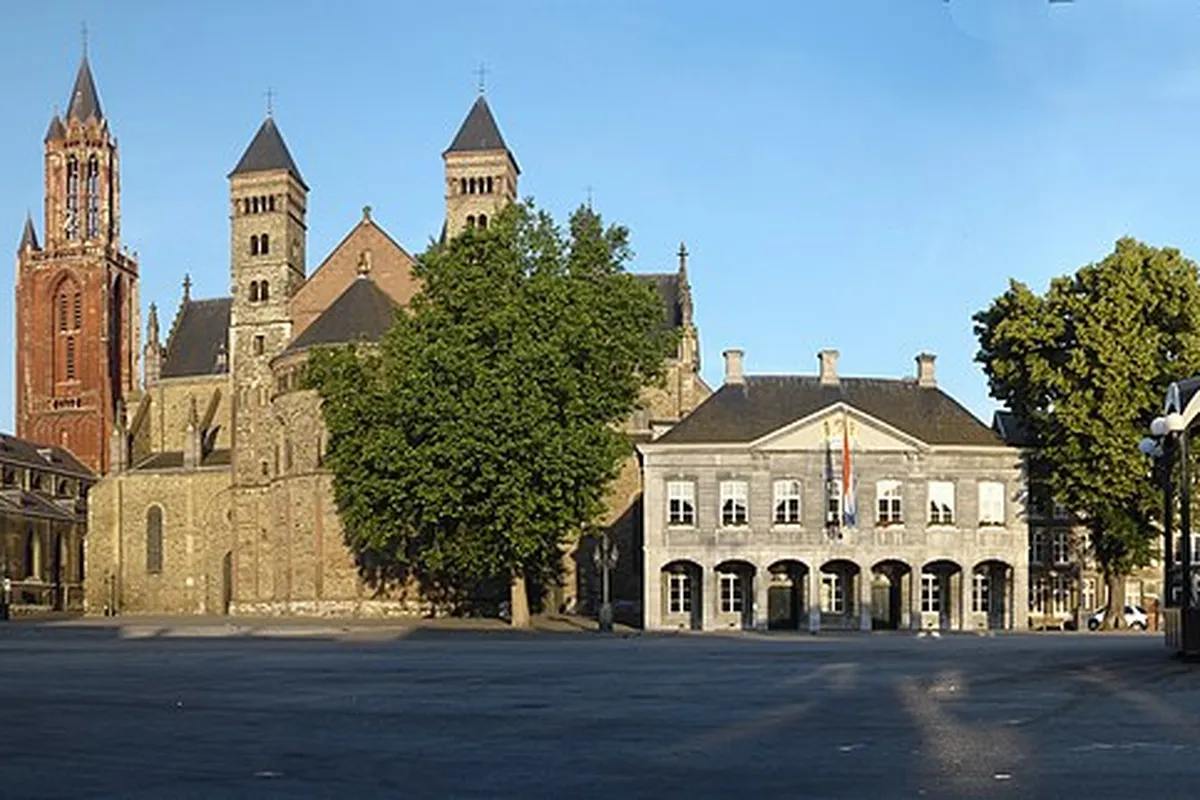 Photo: Maastricht, the Netherlands. Source: Wikimedia Commons.
Maastricht sits at the very bottom of the Netherlands, wedged between Belgium and Germany. This is not a footnote — it shapes everything about the city. The food is richer, the architecture is older (Roman ruins, medieval walls, Baroque churches), and the culture draws as much from the south as from the north.
Locals call it the Bourgondische levensstijl — Burgundian lifestyle. In practice, this means long lunches are considered reasonable, terraces fill up the moment sunshine appears, and nobody looks at you strangely for ordering a glass of wine at 3 pm on a Tuesday. Coming from London, I found this alarming and then quickly wonderful.
The city has roughly 120,000 residents, which makes it feel genuinely walkable. The old centre sits within a loop of the Maas river and what remains of the medieval city walls. You can walk from one end to the other in 25 minutes. Cycling takes 10.
Why Move to Maastricht?
Maastricht University and the International Community
Maastricht University (UM) is unusual in the Dutch context: it teaches the majority of its programmes entirely in English, and about half its student population is international. This creates an expat-friendly environment that goes well beyond the campus. English is genuinely functional here — not a reluctant accommodation, but a working language.
The university also attracts researchers, academics, and knowledge workers from across Europe. If you are moving for a UM position or for a partner who is, you will find a ready-made social network and a university relocation service that can ease the early weeks considerably.
Proximity to Belgium and Germany
Living in Maastricht means having Liège 30 minutes away, Aachen 45 minutes, and Brussels under two hours. If your work spans borders — or if you simply enjoy access to three countries’ worth of food, culture, and airports — this location is genuinely useful. Liège Airport (sometimes called Charleroi-adjacent for budget flights) adds options that Schiphol-dependent cities cannot match.
A Different Kind of Netherlands
If you have visited the Randstad and found it too busy, too expensive, or too flat and featureless, Maastricht offers an alternative. There are actual hills nearby (Sint-Pietersberg), a genuine old town that survived World War Two largely intact, and a pace of life that does not revolve around productivity. For families, retirees, or remote workers who can choose their location, this is a real draw.
Cost of Living in Maastricht
Maastricht is cheaper than Amsterdam, Utrecht, or The Hague. It is not cheap in absolute terms — the Netherlands is expensive — but the gap is meaningful.
For a detailed breakdown of Dutch living costs, I recommend reading my cost of living in the Netherlands guide. Here is what is specific to Maastricht in 2026.
Rent:
- Room in shared house: €500–€750/month
- Studio or one-bedroom flat: €900–€1,300/month
- Two-bedroom flat: €1,300–€1,800/month
- Family house (3-4 bedrooms): €1,800–€2,600/month
These are private rental figures. Social housing exists but has long waiting lists — years, not months.
Groceries: Comparable to the rest of the Netherlands. Albert Heijn and Jumbo are the main supermarkets. Belgian and German cross-border shopping for wine, cheese, and meat is a popular local habit that genuinely reduces food costs if you have a car.
Eating out: Slightly cheaper than Amsterdam on average. A main course at a mid-range restaurant runs €16–€24. The Wyck neighbourhood has a cluster of excellent restaurants at various price points.
Transport: Maastricht has a compact centre, so many residents cycle and spend almost nothing on daily transport. A monthly NS subscription for train travel to Amsterdam or Utrecht is the major transport cost to budget for — roughly €150–€300/month depending on your destination and subscription type. See my OV-chipkaart guide for how the Dutch public transport payment system works.
Health insurance: Mandatory for everyone in the Netherlands. Budget €130–€180/month for a standard policy. My Dutch health insurance guide covers how to choose the right plan.
Best Neighbourhoods for Expats
Wyck
East of the Maas and a five-minute walk from the train station, Wyck is arguably the most expat-friendly neighbourhood in Maastricht. It has good restaurants, independent shops, cafes, and a hotel strip that keeps it lively without being rowdy. Streets are quiet enough for families, connected enough for young professionals. If you want somewhere central with character, start here.
Centrum (Binnenstad)
The historic centre is beautiful but noisy in summer when tourist numbers peak. Rental prices are higher here, and availability is tighter. It suits people who want to be at the heart of things — near the Vrijthof square, the markets, the restaurants. Families with young children often find it a bit intense.
Jekerkwartier
South of the centre, tucked against the old city walls, the Jekerkwartier is quieter, prettier, and popular with academics and artists. Streets are narrow, buildings are older, and there is a slightly bohemian atmosphere. Limited parking makes it better suited to cyclists and pedestrians. I would move there without hesitation.
Randwyck
The university campus and the Maastricht UMC+ hospital are located in Randwyck, south of the city centre. Purpose-built and less charming than older neighbourhoods, but very practical for anyone working at either institution. Housing is more plentiful here, and proximity to the campus makes it a sensible choice for UM staff and students.
Céramique
A former ceramics factory site turned residential district on the east bank of the Maas, Céramique is architecturally striking — modernist buildings, wide promenades, the Bonnefantenmuseum. It attracts design-minded residents and professionals. Rents are above average. It feels a bit like a city that was designed by a committee, which is either a feature or a bug depending on your taste.
Housing Market and Tips
Maastricht’s housing market has tightened over the last few years, though it remains more manageable than Amsterdam. The private rental market is competitive but not brutal if you are prepared and move quickly.
For a full guide to finding a rental in the Netherlands, read my finding housing in the Netherlands guide. Maastricht-specific tips:
- Funda and Pararius are the two main listing platforms. I wrote a detailed Funda vs Pararius comparison if you are unsure which to use — in short, use both.
- University housing services: If you are affiliated with UM, register with them immediately. They maintain a list of verified private landlords and occasionally have direct offers unavailable elsewhere.
- Facebook groups: “Expats in Maastricht” and “Housing Maastricht” on Facebook are active and worth joining. Listings appear here that never reach Funda.
- Visit before you commit. Maastricht is small enough that you can see five properties in a single day. Do this rather than renting sight-unseen — neighbourhood feel varies significantly at street level.
- Budget carefully. Use the housing budget checker tool to calculate what you can reasonably afford before you start viewing.
One honest note: studio flats suitable for international students are in particularly short supply. If you are coming for a one-year master’s programme, apply for university accommodation early — the private market for short-term lets is expensive and competitive.
Registration and Your BSN
Once you have an address, you need to register with Gemeente Maastricht (the municipal council) and receive your BSN — your citizen service number. You cannot open a bank account, sign a rental contract properly, access healthcare, or do much else of practical importance without it.
I have written a full step-by-step BSN registration guide that covers the process in detail. The short version:
- Book an appointment online at the Gemeente Maastricht website (gemeente.maastricht.nl).
- Bring your passport or ID, your rental contract or proof of address, and if applicable your residence permit.
- EU citizens register and receive their BSN at this appointment. Non-EU citizens must already hold a valid MVV (entry visa) or residence permit.
- You will receive your BSN on the spot or within a few days by post.
The Gemeente Maastricht office is on Mosae Forum, very central. Staff typically speak English. Appointments fill up a few weeks in advance, so book as soon as you have confirmed accommodation.
If you want to plan ahead, the BSN planner tool can help you map out the timeline from arrival to registration.
Transport
Train to the Randstad
This is the one area where Maastricht’s location is genuinely inconvenient. Amsterdam is 2.5 hours away by direct Intercity. Utrecht takes around 2 hours. The Hague and Rotterdam are similar. If you need to commute to a Randstad city more than once or twice a week, Maastricht will feel exhausting.
For occasional trips, however, the train is comfortable and reliable. NS (Dutch Rail) runs direct services throughout the day. Check the OV-chipkaart guide for how to set up your travel account and subscription.
Cycling
Within Maastricht itself, cycling is the obvious main mode of transport. The city is small, flat in its centre (hillier near Sint-Pietersberg), and has good cycling infrastructure. Most expats buy a second-hand bike within their first week — typically €60–€120 for a reliable Dutch city bike. Do not buy a new one; theft is common everywhere in the Netherlands.
My cycling in the Netherlands guide covers the rules, etiquette, and practicalities if you are new to Dutch cycling culture.
Local Bus
Arriva operates bus services within Maastricht and to surrounding villages. The network is functional but not extensive. Within the city centre, you will rarely need it. If you live further out — in Bunde, Meerssen, or other villages — bus schedules are less frequent and often inconvenient for evening travel.
Car
More expats in Maastricht own cars than in Amsterdam or Utrecht. Cross-border trips to Belgium and Germany make a car genuinely useful, and parking — while not free — is more available than in larger Dutch cities. Budget around €1,500–€2,500/year for insurance, road tax, and maintenance if you bring or buy a vehicle.
Work and Economy
Maastricht University
UM is the city’s dominant employer for knowledge workers and the reason most international professionals end up in Maastricht. Research positions, teaching roles, and administrative jobs at UM are posted on their careers page and via academic job boards. The university is consistently ranked among the top research universities in Europe.
MECC Maastricht
The Maastricht Exhibition and Congress Centre (MECC) is one of the largest conference venues in the Netherlands and hosts major international events throughout the year, including the renowned TEFAF art fair. This drives a small but steady hospitality and events economy.
Brightlands
Brightlands is a network of four campus sites across Limburg province focused on food, health, smart services, and chemicals. The Maastricht Health Campus is linked to UM and the hospital. If you work in life sciences, health tech, or food innovation, Brightlands companies are worth researching before you move.
The Reality of the Job Market
I want to be honest here: Maastricht’s job market is smaller than the Randstad’s. If you work in finance, tech, or consulting, you will find fewer opportunities locally and may need to commute or work remotely. Many expats in Maastricht work for UM, the hospital, or international organisations, or they are remote workers who chose the city for lifestyle rather than proximity to employers.
Before you move, make sure you have either a confirmed position or a realistic plan for remote work. The complete guide to moving to the Netherlands covers work permits and employment rights in full.
For banking — which you will need to sort quickly — my best bank accounts for expats guide ranks the main options available to newcomers.
Social Life and Culture
Maastricht has a social calendar that punches well above its size.
Carnaval is the big one. Three days in February or March (the timing shifts with Easter) when the city more or less stops functioning normally and turns into a street party. It is genuinely wild by Dutch standards — costumes, brass bands, drinking at 10am, the lot. As an expat, I recommend entering the spirit of it rather than trying to work through it. Book accommodation early if you have friends visiting.
TEFAF (The European Fine Art Fair) takes place at MECC every March and draws collectors and dealers from across the world. You do not need to buy anything to enjoy the buzz it creates in the city.
The restaurant scene is exceptional for a city this size. The concentration of good food in the Wyck neighbourhood and around the Vrijthof is impressive. Limburgse vlaai (the local fruit tart), zuurvlees (a sweet-sour beef stew with Belgian roots), and the extensive local cheese culture are worth exploring seriously.
The expat social scene is active and largely centred around UM and the various international clubs and networks that have grown up around it. The Maastricht International Club is a good first port of call for meeting people.
Pros and Cons Summary
Pros:
- Beautiful, historic city with genuine character
- More affordable housing than Amsterdam or Utrecht
- Strong English-language environment thanks to UM
- Excellent food, wine, and café culture
- Close to Belgium and Germany — three countries, one commute
- Calm, walkable, and very cyclable within the city
- Strong international community through the university
- Exceptional quality of life for families and remote workers
Cons:
- Long journey times to the Randstad (Amsterdam 2.5 hours)
- Smaller job market — not ideal without a confirmed position
- Housing market has tightened, especially for students and short-term lets
- Public transport within the region is limited compared to major cities
- Can feel quiet or isolated for those who want a big-city energy
- Some expats find the Limburgse dialect and culture a little insular at first
Conclusion
Maastricht will not suit every expat. If your priority is career opportunities or fast connections to Randstad business hubs, you may find it too small and too far south. Be honest with yourself about the job market before you commit.
If the lifestyle trade-off works for you, here is what to do first: confirm you have either a job offer or a solid remote work arrangement, then book a viewing trip to see two or three neighbourhoods in person — Wyck, Jekerkwartier, and Randwyck feel very different at street level. Once you have an address, your first appointment is at Gemeente Maastricht to register and get your BSN.
Start with the complete guide to moving to the Netherlands to get the legal and admin timeline straight, then use the BSN planner tool to work out your registration sequence. The expat community here is active and easy to find once you arrive — but the practical steps come first.
Sarah van den Berg is an expat coach and relocation specialist. Half Dutch, half British, she has been living in the Netherlands for over 10 years and helps internationals settle into Dutch life.